
Tomatoes are beautiful, but their acid is a killer for metal packaging 1. I have seen new buyers lose huge amounts of money because their cans swelled up and burst. You must choose the right armor for your product.
Common coating weights for tomato cans range from 2.8g/m² to 11.2g/m². The industry standard is 5.6g/m² (T5), offering a balance of protection and cost. For high-acid pastes, 11.2g/m² (T10) provides maximum corrosion resistance against acidic attack.
Selecting the correct weight is not just about safety; it is about smart spending. Let me guide you through the details so you can buy with confidence.
Should I use differential coating (e.g., 5.6/2.8) to save costs?
Many of my clients worry that using different thicknesses on each side will cause confusion in their factory. But if you ignore this option, you are paying for tin that you do not need.
Differential coating is highly recommended for tomato cans to reduce costs. A specification of 5.6g/m² internally and 2.8g/m² externally saves approximately 25% on tin usage. This maintains internal acid resistance while providing sufficient external rust protection.
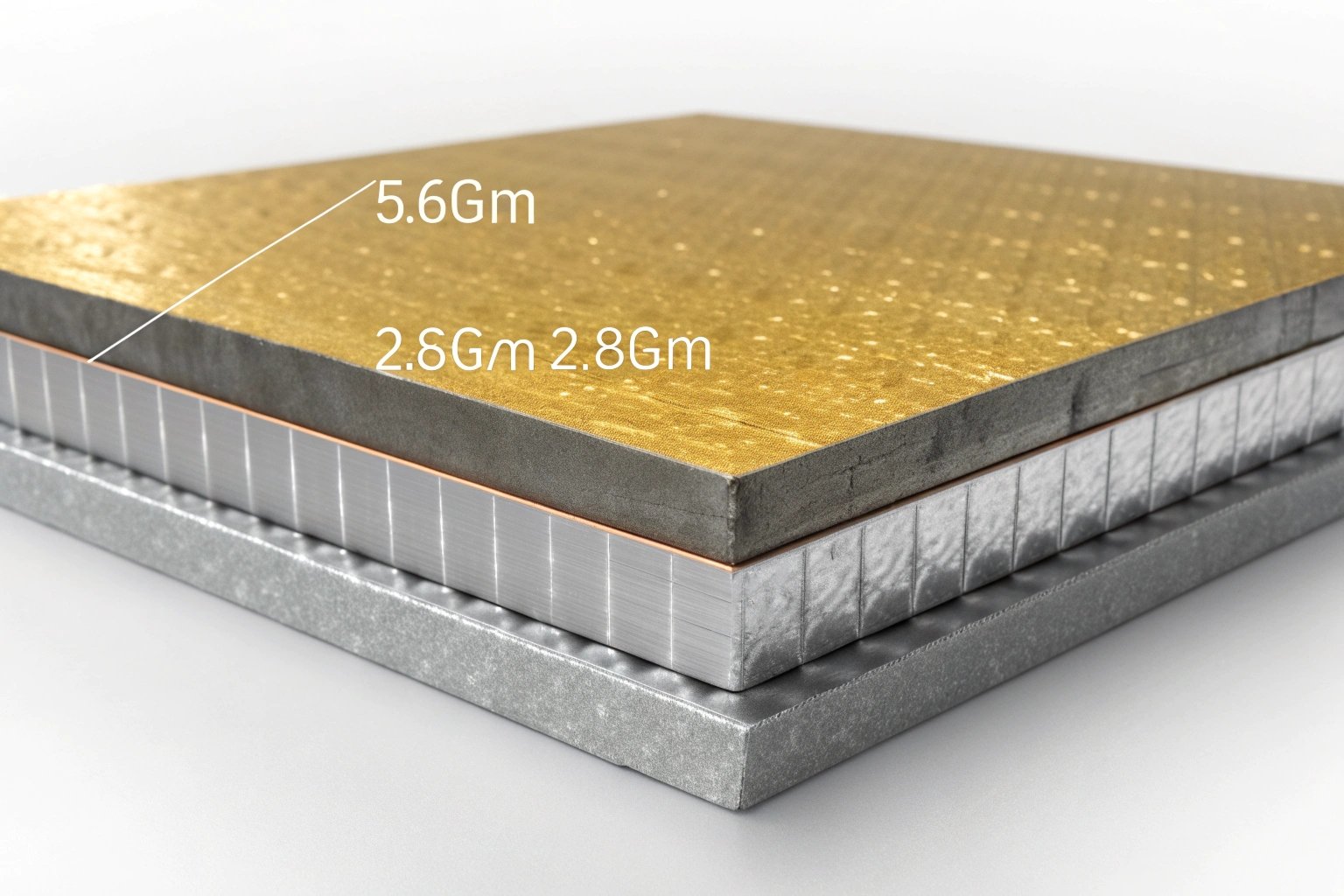
Differential coating 2 is a smart strategy for any large-scale canning operation. In my business, I advise clients like Carlos from Mexico to switch to this specification. It makes no sense to put a heavy layer of expensive tin on the outside of the can. The outside only faces the air in your warehouse. It does not face the aggressive acid of the tomato paste. By using a lighter layer on the outside, you keep the food safe without wasting money.
How to manage the risk
The biggest fear is mixing up the sides. You do not want the thin layer facing the tomato acid. To stop this, we put special markings on the sheet. When we produce the coil, we add faint lines to the heavy side. You must train your workers to look for these lines. It is a simple step. If your team checks the lines before they load the machine, you will never have a problem.
The real cost savings
Tin is a precious metal. Its price changes every day. When you reduce the tin weight on the outside, you lower your material cost. For a factory making millions of cans, these cents add up to thousands of dollars.
Here is a simple breakdown of how much tin you save:
| Coating Type | Internal Weight (g/m²) | External Weight (g/m²) | Total Tin Used (g/m²) | Savings Factor |
|---|---|---|---|---|
| Equal Coating | 5.6 (Thick) | 5.6 (Thick) | 11.2 | 0% (Baseline) |
| Differential | 5.6 (Thick) | 2.8 (Thin) | 8.4 | 25% Less Tin |
| High Differential | 5.6 (Thick) | 1.1 (Very Thin) | 6.7 | 40% Less Tin |
When to avoid this
There is one time you should not do this. If your warehouse is very humid or near the sea, a thin external coating might rust. If you store cans for a long time in a hot, wet place without air conditioning, stick to the thicker coating on both sides. But for most modern factories, differential coating is the best choice.
How do I ensure the coating is thick enough to prevent acidity corrosion?
A bloated can is a nightmare for your brand reputation. I have helped many factories fix "hydrogen swelling" issues simply by adjusting their tin specification to match the product acidity.
To prevent acidity corrosion, ensure a minimum internal free tin level of 2.8g/m² coupled with a high-quality lacquer. Testing for the Iron Solution Value (ISV) and Pickle Lag Value (PLV) confirms the steel’s surface quality and corrosion resistance.
You need to understand how tin works inside a can. It is a "sacrificial" metal. This means the tin slowly dissolves to protect the steel. If the tin layer is too thin, it dissolves too fast. Once the tin is gone, the tomato acid attacks the steel. This creates gas. The gas pushes the can out, and it looks like a balloon. We call this a "hydrogen swell" 3.
Matching coating to shelf life
You must ask yourself: "How long will this can sit on a shelf?" If you sell your product quickly, you can use a standard coating. If you want your can to last for 2 or 3 years, you need more tin. A thicker layer of tin gives you a longer "warranty" against rust.
The importance of the steel base
It is not just about the tin. The steel underneath matters too. We use specific tests called ISV and PLV. These tests check if the steel surface is clean and reactive. If the steel is dirty, even a sacrificial metal 4 like tin will not stick well. When you buy from us, we check these values in our lab.
Recommended specifications
Here is a guide based on the acidity of your tomato product. The pH value 5 tells us how strong the acid is.
| Tomato Product | Acidity Level (pH) | Minimum Recommended Coating | Risk Level |
|---|---|---|---|
| Tomato Juice | 4.1 – 4.3 | 2.8g/m² (Light) | Low |
| Whole Peeled | 4.0 – 4.5 | 5.6g/m² (Standard) | Medium |
| Tomato Paste | 3.9 – 4.2 | 8.4g/m² or 11.2g/m² (Heavy) | High |
| Pizza Sauce | 4.0 – 4.4 | 5.6g/m² (Standard) | Medium |
Do not guess. Check the pH of your product. If you have a very sour or salty recipe, go for the heavier coating. It is cheaper to pay for more tin now than to pay for a recall later.
Can you recommend a specific lacquer for high-acid tomato paste?
Tin alone is rarely enough for modern tomato products. You need a second layer of defense, but choosing the wrong paint leads to peeling and contamination.
For high-acid tomato paste, Epoxy Phenolic lacquers are the best choice due to their superior adhesion and flexibility. Aluminized versions help mask sulfur staining, while BPA-NI Polyester systems are increasingly used to meet strict European food safety regulations.
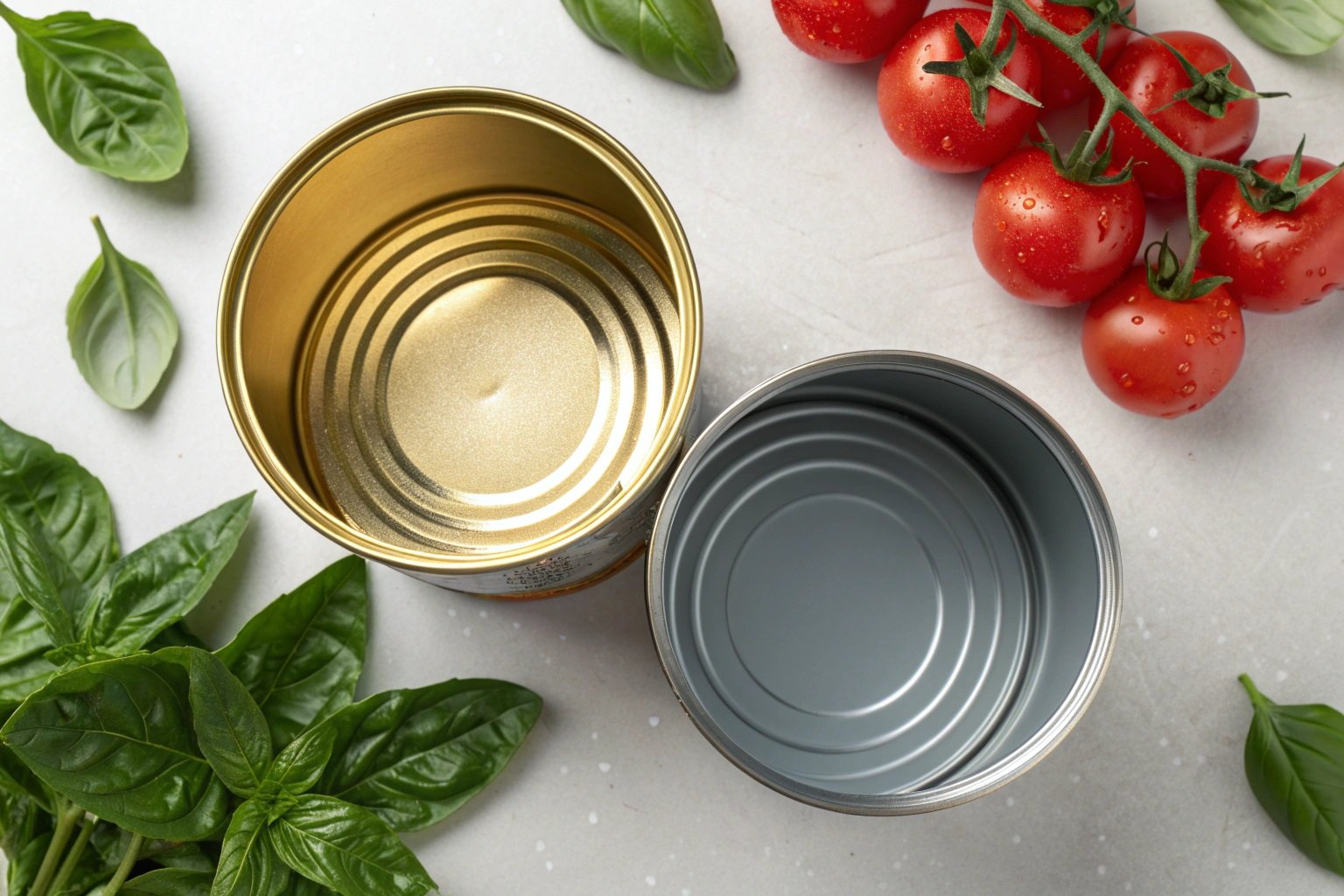
Think of lacquer as a plastic bag inside your can. It stops the food from touching the metal. For tomatoes, this is critical. But not all lacquers are the same. Some are hard and brittle. Some are soft and flexible.
The Gold Standard: Epoxy Phenolic
For years, the "Gold" lacquer has been the best. It is made of Epoxy and Phenolic resins 6. It sticks to the metal very well. When you bend the metal to make the can, this lacquer bends with it. It does not crack. If the lacquer cracks, the acid gets in.
The problem with sulfur
Tomatoes have protein. When you cook them, they release sulfur. Sulfur 7 reacts with tin and turns it black. It looks like mold, but it is not. It is just a chemical stain. To hide this, we add aluminum powder to the lacquer. This makes the inside of the can look silver or grey. It hides the black spots so the food looks fresh.
The new challenge: BPA-NI
Many countries now ban a chemical called BPA. If you export to Europe, you must be careful. Traditional Gold lacquer has BPA. You need to ask for "BPA-NI" 8 (Non-Intent). This is usually a Polyester lacquer. In the past, these were not very good. They would peel off. But today, the technology is much better.
How to choose
Here is a quick checklist for your lacquer choice:
- Adhesion: Can you scratch it off? We do a "tape test" to check.
- Flexibility: Does it crack when you make the lid?
- Chemical Resistance: boil it in tomato acid for 1 hour. Does it change color?
- Regulations: Does your customer need BPA-free?
| Lacquer System | Color | Key Advantage | Best For |
|---|---|---|---|
| Epoxy Phenolic | Gold | Best adhesion & acid resistance | Standard Paste |
| Aluminized | Silver/Grey | Hides sulfur blackening | Sauces with meat |
| Organosol | Gold/White | Very flexible | Deep drawn cans |
| Polyester (BPA-NI) | Clear/White | Meets EU safety laws | Exports to Europe |
How do I test the tin coating weight upon arrival at my factory?
Suppliers sometimes deliver less tin than you paid for. If you do not check the material upon arrival, you are gambling with the quality of your final product.
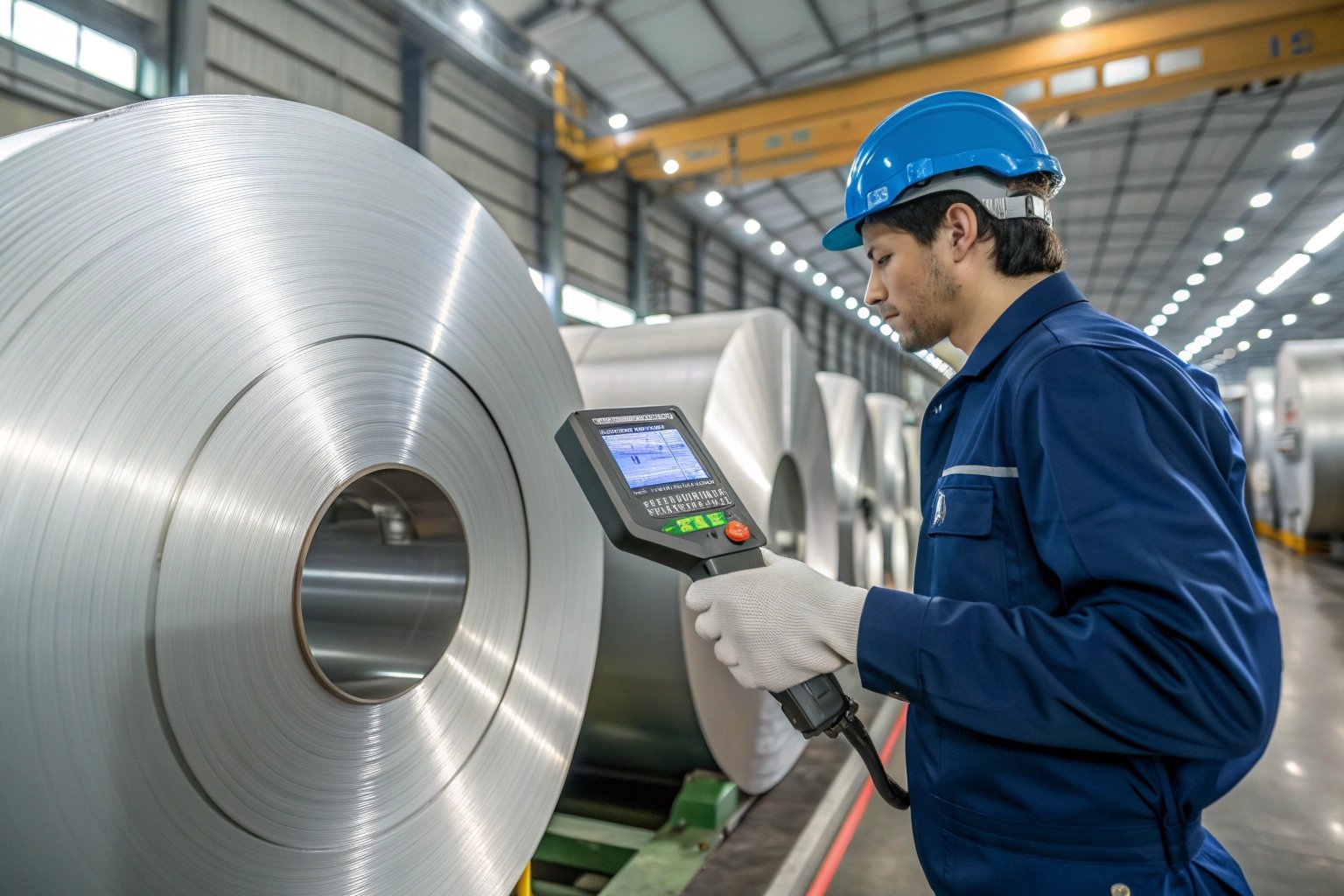
The most accurate method is the Coulometric (Weigh-Strip-Weigh) test strictly following ASTM A630 standards. For quick non-destructive verification in the warehouse, portable X-ray Fluorescence (XRF) analyzers provide immediate readings to confirm if the batch meets your specifications.
Trust is good, but checking is better. In my 27 years in this industry, I have seen traders sell "Standard" plate that was actually "Light" plate. You cannot see the difference with your eyes. 2.8g and 5.6g look exactly the same. You need tools to see the truth.
The Lab Method (Coulometric)
This is the most precise way. You cut a small circle of the tinplate. You put it in a special liquid and run electricity through it. The machine measures exactly how much tin comes off. It takes time, but it is 100% accurate. If you have a quality dispute with a supplier, this is the method that counts in court, often involving a Coulometric 9 procedure.
The Warehouse Method (XRF)
Most factory managers do not have time for the lab test for every coil. That is why I love the XRF gun 10. It looks like a sci-fi pistol. You point it at the metal coil, pull the trigger, and in 3 seconds it tells you the number. It costs money to buy, but it saves so much time. You can check the top, middle, and bottom of a shipment in minutes.
What else to look for
Besides the weight, you should look for visual defects. When you open the container, look at the edges of the coil.
- Rust: Do you see white powder? That means it got wet. Reject it.
- Oil: Is it too dry? The sheets will scratch each other. Is it too wet? The lacquer will not stick.
- Shape: Is the coil round? If it is oval, it was dropped. It will not feed into your machine correctly.
We always welcome third-party inspectors like SGS. Before we ship from Fujian, we let them come in and test the goods. They issue a certificate. This is your insurance policy. Never buy from a new factory without this certificate.
Conclusion
To keep your tomato cans safe, use 5.6g/m² tin coating, choose Epoxy Phenolic lacquer, and always test your material before production.
Would you like me to send you a sample of our BPA-NI lacquered tinplate so you can test the adhesion in your own factory?
Footnotes
1. Overview of metal packaging materials, benefits, and industry standards. ↩︎
2. Technical benefits and cost-efficiency of using differential tinplate coatings. ↩︎
3. Understanding the causes and mechanics of hydrogen swelling in cans. ↩︎
4. How sacrificial anodes protect underlying metals from corrosion. ↩︎
5. Importance of pH measurement in determining food acidity levels. ↩︎
6. Chemical properties of epoxy phenolic resins used in protective coatings. ↩︎
7. Chemical details of sulfur and its reactions with metals. ↩︎
8. Regulatory guide on Bisphenol A Non-Intent (BPA-NI) packaging compliance. ↩︎
9. Standard test methods for determining tin coating weights electrolytically. ↩︎
10. Use of X-ray Fluorescence for rapid material analysis. ↩︎