
I have seen many canning lines stop because of a tiny fraction of a millimeter. When your bottom ends don’t fit perfectly, your whole production schedule starts to fall apart quickly.
Thickness tolerance for tinplate bottom ends matters because even small deviations change double seam formation, internal pressure resistance, and line performance, which directly affects leak risk, denting, and overall packaging safety.
It is easy to think that a small difference in metal thickness is okay, but I want to show you why staying within strict limits is the only way to protect your brand.
How does thickness variation cause leakage in my seaming process?
I once visited a client who was losing thousands of cans a day because their seams looked fine but failed under pressure. We found that the metal thickness was jumping around too much.
Variation in thickness causes leakage by preventing the seamer rolls from creating a tight, consistent double seam. If the metal is too thin, the seam is loose; if it is too thick, the metal can crack or deform.
The Mechanics of the Double Seam
The double seam 1 is the most important part of a food can. It is a mechanical fold that joins the can body to the bottom end. To make this fold airtight, the seaming rolls and chucks are set to a very specific distance. When I supply you with bottom ends, my factory ensures the metal gauge is consistent. If the metal becomes even 0.02mm thicker than the setting, the pressure inside the seamer becomes too high. This can cause "cutovers" where the metal is pinched so hard it actually breaks.
On the other hand, if the metal is too thin, the "hooks" inside the seam won’t overlap enough. You might not see the gap with your eyes, but bacteria can get in. During the cooling process after sterilization 2, the can creates a vacuum. A loose seam will suck in cooling water, which leads to spoiled food and "blown" cans on the retail shelf.
Material Consistency and Machine Settings
High-speed seaming machines run at speeds of over 500 cans per minute. At this speed, the machine cannot adjust itself for every can. It needs every bottom end to be exactly the same. When the thickness varies, the "spring back" of the metal changes. Harder or thicker metal fights the folding process, while thinner metal folds too easily. This inconsistency makes it impossible to maintain a Safety Zone 3 in your quality control.
| Seam Component | Impact of Over-Tolerance (Too Thick) | Impact of Under-Tolerance (Too Thin) |
|---|---|---|
| Cover Hook | Fractures or "Vees" in the fold | Short hook, low overlap percentage |
| Seam Tightness | Excessive pressure, coating damage | Loose seam, risk of leakage |
| Seam Gap | Metal-to-metal crushing | Large gap, sealing compound fails |
Damage to Protective Coatings
We spend a lot of time picking the right lacquer 4 for your food type, like high-acid fruits or sulfur-heavy meats. When the thickness is out of spec, the physical stress on the seam increases. This stress can cause the internal lacquer to crack. Even if the can doesn’t leak immediately, the food will touch the raw steel. This leads to corrosion 5, "pitting," and eventually a hole in the can. Keeping the thickness within tolerance protects the chemical barrier we worked so hard to apply.
What represents a safe thickness tolerance range for high-speed lines?
I always tell my customers that "good enough" is not enough when you are running a high-speed factory. You need to know the exact numbers to keep your machines running smoothly.
A safe thickness tolerance range for high-speed lines is usually within ±5% of the nominal gauge, though top-tier suppliers like Huajiang aim for even tighter control to ensure seamless 24/7 production cycles.

International Standards and ASTM A623
In our industry, we follow global rules like the ASTM A623 6 or ISO 11949. These standards tell us exactly how much a sheet of tinplate can vary. For most food ends, which are between 0.18mm and 0.25mm thick, the industry allows a small window. However, "standard" is often the bare minimum. Because I manage the whole process from the coil to the finished lid, I know that high-speed lines in places like Mexico or Spain need better than just "standard."
If your line runs at high speeds, even a 3% shift in thickness can change the way the lids "nest" or stack in the feeder. If they don’t stack perfectly, the machine might grab two lids at once or jam. This leads to downtime 7, and in the canning business, downtime is very expensive.
Precision in Tooling and Die Life
The dies we use to punch out the bottom ends are made of very hard tungsten carbide 8. These tools are designed for a specific metal thickness. When we run material that stays within a tight tolerance, these tools last much longer. If the metal is consistently over-gauge, it puts more heat and friction on the tools. This wears them down faster, leading to burrs on the edges of your lids. A burr is a sharp piece of metal that can cut your sealing compound or even injure a consumer.
Measuring Success in the Lab
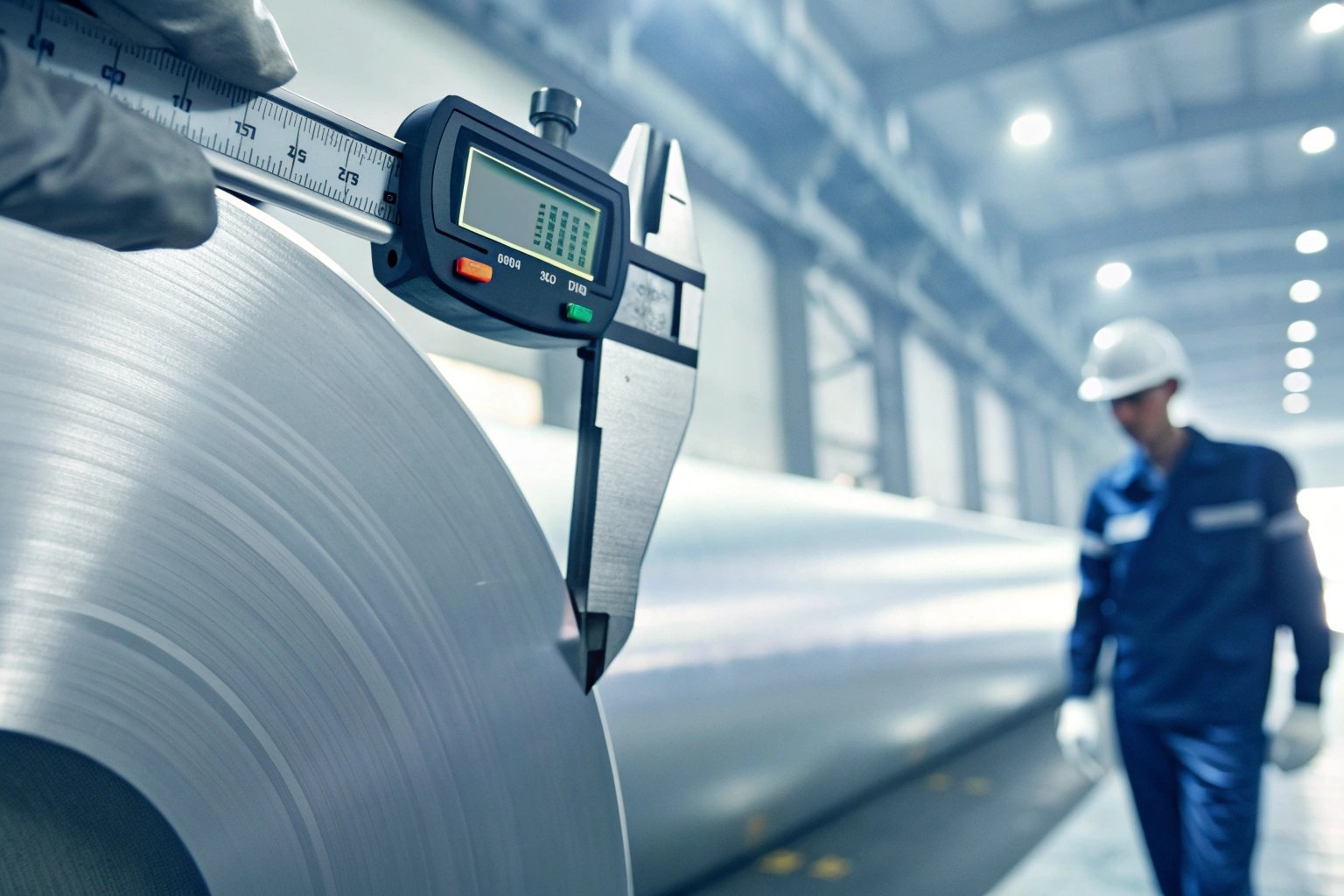
We don’t just guess at the thickness. In our Fujian factory, we use automatic sensors on our 53 Fuji coating lines to monitor the material. We check the thickness at the start, middle, and end of every coil. This data helps us guarantee that the 307E or 401E ends you receive will fit your cans every single time.
Comparison of Industry Standards
| Feature | Standard ASTM A623 | Huajiang Premium Export |
|---|---|---|
| Thickness Tolerance | ±10% (General) | ±3% to ±5% (Targeted) |
| Hardness (Temper) | ±3 HR30T | ±2 HR30T |
| Surface Quality | Commercial Grade | Food Grade (Zero Defects) |
Can I request tighter thickness tolerances for my specific order?
I get this question a lot from procurement directors who are tired of seam adjustments. The short answer is yes, and it is actually a very smart move for your business.
Yes, you can request tighter thickness tolerances for specific orders, especially when using thin-gauge double-reduced (DR) steel or when matching high-precision imperial can sizes that require exact seaming fits.

Why Customization Matters for Specific Foods
If you are packing something very processed, like meat or fish in oil, the can goes through a lot of pressure during the "retort" or cooking phase. In these cases, I often suggest a slightly thicker or more rigid bottom end. If you want to save money, we can move to a thinner metal, but we must make the tolerance much tighter. This is called "down-gauging" 9. It saves you 5% to 8% in costs, but only if the quality is perfect. If the metal thickness varies too much on thin material, the bottom will "peak" or bulge out permanently.
We work with you to find the "Sweet Spot." This is the point where the metal is thin enough to save money but thick enough—and consistent enough—to stay safe. I have 100,000 tons of stock from big mills like Baosteel, so I can pick the exact coil that matches your specific needs.
Technical Consultation and Coating Pairs
It isn’t just about the steel. It is about how the steel, the thickness, and the coating work together. For example, if you are canning high-acid tomatoes, the coating needs to be thick. If the steel thickness is also on the high side of the tolerance, the total thickness of the "steel + coating" might be too much for your seamer. When you ask for a custom tolerance, we look at the whole package. We make sure the "finished gauge" is what your machine expects.
Ensuring Compliance for Global Markets
When Carlos Gomez in Mexico buys from us, he needs to know the product meets FDA 10 or EU rules. Tight tolerances are a sign of a high-quality factory. Many smaller factories cannot control their thickness because their machines are old. Because we use 53 modern Fuji lines, we can hit those tight targets. We provide an SGS report with every shipment to prove it. This makes it much easier for your quality team to sign off on the shipment.
Benefits of Customized Thickness
- Reduced Scrap: Fewer cans are thrown away because of bad seams.
- Faster Line Speeds: You can run your machines at their maximum rated speed.
- Predictable Costs: You know exactly how many ends you get per ton of steel.
- Brand Safety: You drastically reduce the risk of a product recall.
How do inconsistent thicknesses affect the stackability of my cans?
I’ve walked through warehouses where the bottom cans in a stack were starting to buckle. It’s a scary sight for any operations manager.
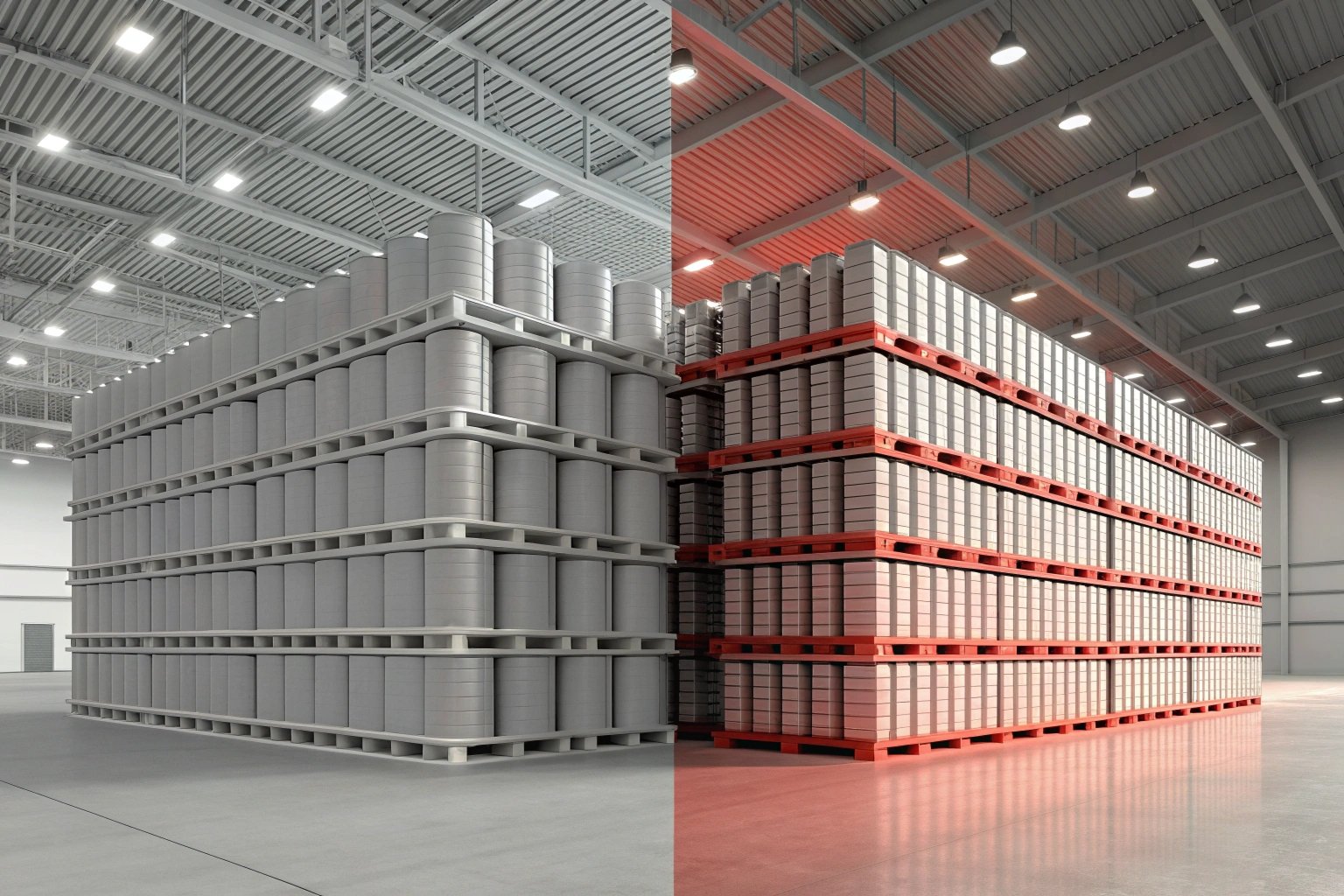
Inconsistent thickness ruins stackability by creating weak points in the can’t structure; a single "under-gauge" bottom end can fail under the weight of the pallets above, leading to a collapsed stack.
The Physics of Vertical Load
The bottom end of the can is not just a lid; it is a structural foundation. In a modern warehouse, cans are stacked three or four pallets high. The cans at the very bottom are under hundreds of kilograms of pressure. If the thickness of the bottom end is consistent, the pressure is spread evenly around the rim. However, if one side of the end is thinner than the other, or if one batch is weak, the metal will "panel" or fold inward. Once one can fails, the whole stack can lean and fall.
I always explain to my clients that the "countersink depth" (the area where the lid dips down) is critical here. The depth of that dip is controlled by the thickness of the metal during the stamping process. If the metal is too thin, the countersink will push out under pressure. This is called "countersink growth," and it is a leading cause of warehouse accidents.
Vibration and Shipping Stress
Your cans don’t just sit still. They travel on trucks and ships across the ocean. During shipping, they experience "micro-vibrations." If the bottom ends have inconsistent thicknesses, they don’t lock together perfectly when stacked. They can rub against each other, which scratches the paint and weakens the metal. Consistent thickness ensures that every can nests perfectly into the one below it. This creates a solid block of product that can survive a rough journey to the other side of the world.
Precision in the Beads and Ribs
Most bottom ends have circular "ribs" or beads stamped into them. These are there to give the flat metal more strength, like the arches of a bridge. If the metal thickness varies, these ribs won’t be formed to the same height. A shallow rib is a weak rib. By maintaining a tight tolerance, we ensure that every rib on every one of the 6 billion ends we make each year provides the maximum possible strength.
| Stacking Issue | Root Cause in Thickness | Result |
|---|---|---|
| Peaking | Metal too thin for internal pressure | Can won’t stand straight |
| Paneling | Uneven thickness in the rim | Can body collapses under load |
| Scuffing | Lids don’t nest tightly | Printed design is damaged |
Conclusion
Getting the thickness right is the difference between a smooth production year and a constant headache. By focusing on tight tolerances, we ensure your seams are tight, your stacks are safe, and your costs are low.
Footnotes
1. Technical breakdown of the mechanical interlocking of can bodies and ends. ↩︎
2. Official guidelines on sterilization protocols to ensure consumer food safety. ↩︎
3. Framework for managing workplace safety and quality control standards. ↩︎
4. Analysis of the protective coatings used in the metal packaging industry. ↩︎
5. Fundamentals of metal degradation and methods for prevention in industrial applications. ↩︎
6. Standard specification for tin mill products and general thickness requirements. ↩︎
7. Understanding Overall Equipment Effectiveness and the impact of production halts. ↩︎
8. Properties and industrial uses of tungsten carbide in precision tooling. ↩︎
9. Exploration of material reduction trends in sustainable and cost-effective packaging. ↩︎
10. Regulatory information regarding substances used in food contact and packaging materials. ↩︎