
I have seen many canned food producers lose thousands of dollars because their coatings failed during sterilization. You work hard to source quality ingredients, but if your tinplate bottom ends aren’t cured correctly, your entire production is at risk.
Proper curing ensures the lacquer and compound on tinplate ends are fully cross-linked to resist high-heat retort and corrosive food acids. It requires precise synchronization of peak metal temperature and dwell time to prevent chemical migration and maintain the hermetic seal of the can.
In my 27 years at Huajiang, I have learned that the oven is where food safety is truly decided. If the coating stays "soft" due to low heat, it will peel off. If it gets too hot, it becomes brittle and cracks. Both scenarios lead to "leakers" or "swells," which can destroy your brand’s reputation overnight.
How do I know if the coating on my ends was under-cured?
I once helped a client in Southeast Asia who complained that his tomato cans were rusting from the inside. When I tested his ends, the lacquer came right off with a simple solvent wipe. It was a classic case of under-curing that the previous supplier had ignored.
Under-cured coatings are identified through the "Acetone Rub Test," where the lacquer softens or smears under solvent pressure. You might also notice "blistering" after the retort process or a strange chemical odor when opening the pallet, indicating unreacted monomers remain in the film.

When a coating is under-cured, it hasn’t reached its full "cross-linking density." This means the protective barrier is actually porous at a microscopic level. For acidic foods like fruit or high-sulfur foods like meat, these pores allow the contents to attack the underlying steel. At our Fujian production base, we use strict 50-cycle rub tests 1 to ensure the bond is absolute. If the lacquer isn’t tough enough to withstand the chemical rub, it will never withstand a 24-month shelf life.
Chemical Stability and Adhesion
If you find that the coating on your bottom ends is peeling during the seaming process, it is likely an under-cure issue. The film must be flexible yet firm. Under-cured lacquer remains too "gummy," causing it to stick to the seaming rollers 2 and tear away from the tinplate surface.
Testing Standards for Under-Curing
| Test Type | Procedure | Sign of Under-Curing |
|---|---|---|
| Acetone Rub | 50 double rubs with soaked cotton | Coating dissolves or exposes metal |
| Sterilization | 121°C for 60 minutes in salt water | Blushing (whitening) or peeling |
| Cupping Test | Mechanical stretching of the sheet | Coating flakes off at the stress point |
What acts as a sign that the curing temperature was not stable?
I have walked through many factories where the oven thermometers were old and dusty. I could tell the temperature was fluctuating just by looking at the color of the sheets. One sheet would be golden, the next almost brown. This inconsistency is a major red flag for any professional buyer.
Signs of unstable curing include "color drifting" across a single batch and "blocking," where ends stick together in the sleeve. If the heat fluctuates, the coating will have uneven hardness, causing some ends to fail pressure tests while others pass, creating high risk.
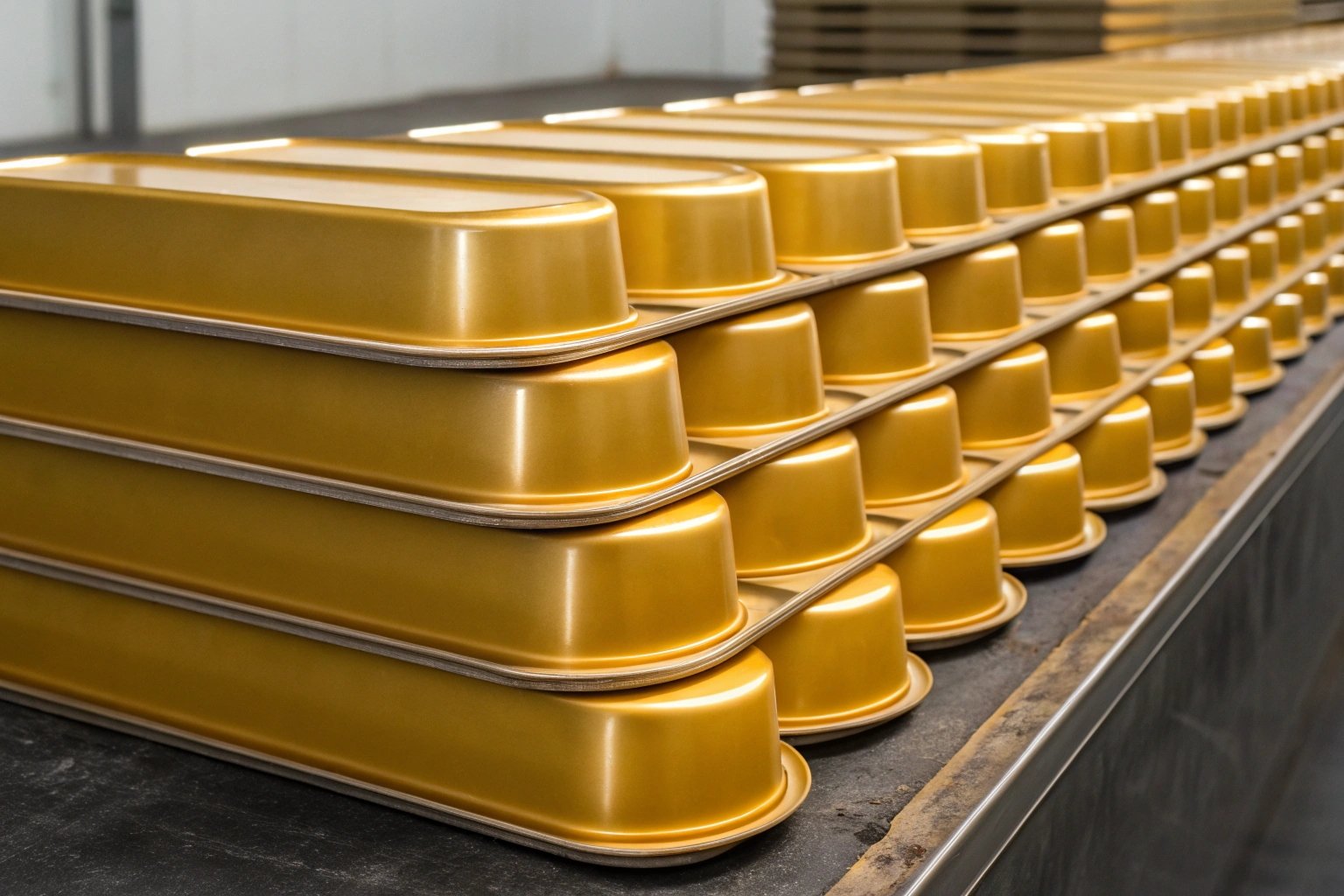
Stable heat is the secret to "Huajiang quality." Our 53 Fuji coating lines 3 use high-speed air circulation to keep the temperature gap within ±5°C. If the temperature jumps up and down, the intermetallic layer 4—that tiny FeSn2 layer between the tin and steel—grows unevenly. This ruins the corrosion resistance. For a buyer like Carlos, who needs total reliability for his fruit exports, this stability is the difference between profit and a massive insurance claim.
Thermal Uniformity Challenges
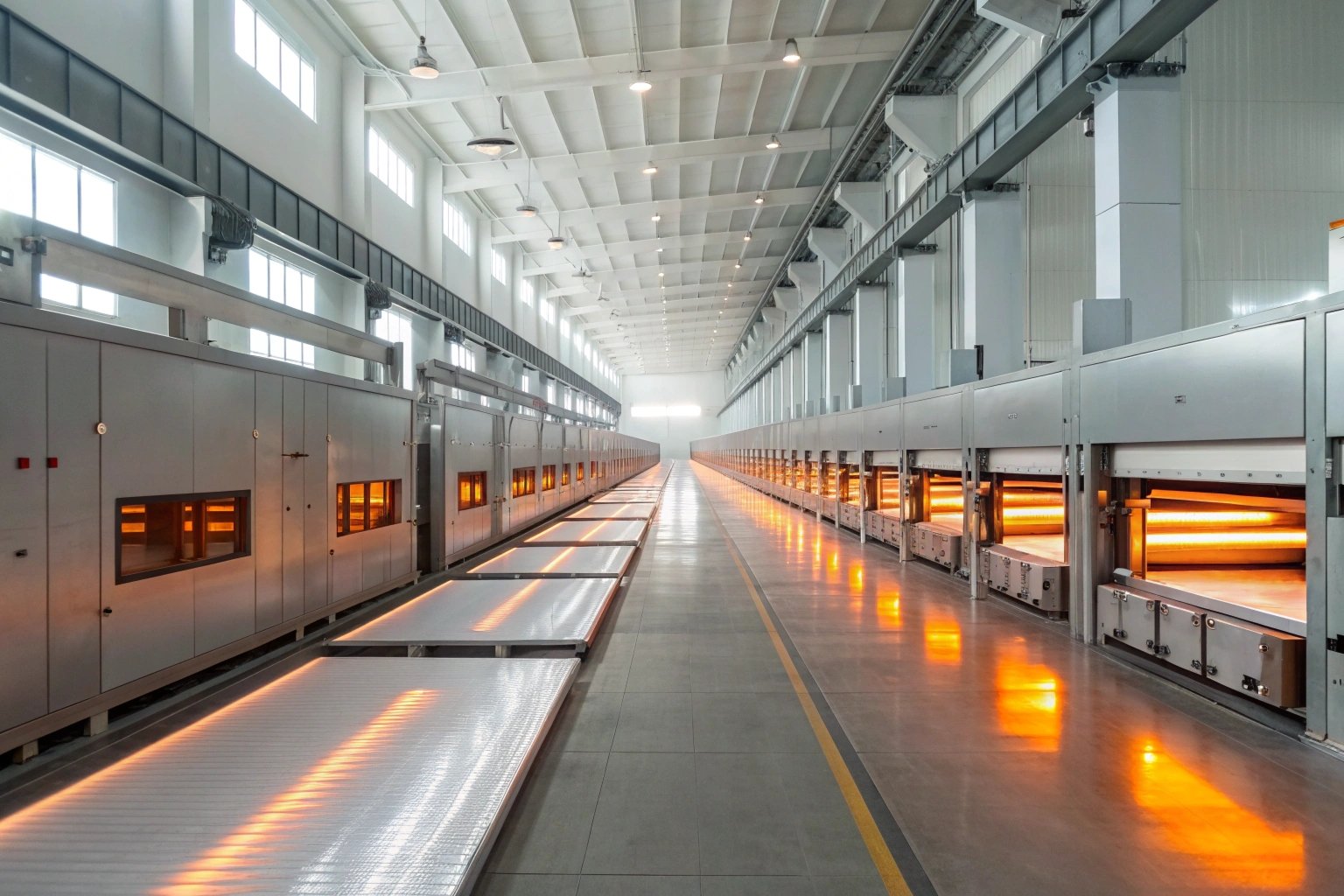
Large tinplate sheets are hard to heat evenly. The edges often get hotter than the middle. Without a modern tunnel-style oven 5 with proper airflow, you get "soft centers" on your sheets. We solve this by recording temperature curves for every single batch, ensuring the heat reaches the very center of every sheet.
Impact of Temperature Fluctuation
- Uneven Polymerization: Part of the end is protected, part is vulnerable.
- Aesthetic Rejection: Different shades of gold or clear lacquer look unprofessional to consumers.
- Sealing Failure: If the compound (the rubber liner) isn’t cured evenly, the seal may fail during the vacuum stage.
Can improper curing lead to chemical migration into my food?
This is the question that matters most for food safety. I tell my team every day: we are not just making metal; we are making food packaging. If the curing is wrong, the chemicals in the paint don’t stay in the paint—they move into the food.
Yes, improper curing is a primary cause of chemical migration. Unreacted monomers and residual solvents stay trapped in an under-baked film. During the high-pressure retort process, these chemicals leach into the food, affecting taste and potentially failing FDA or EU safety migration limits.
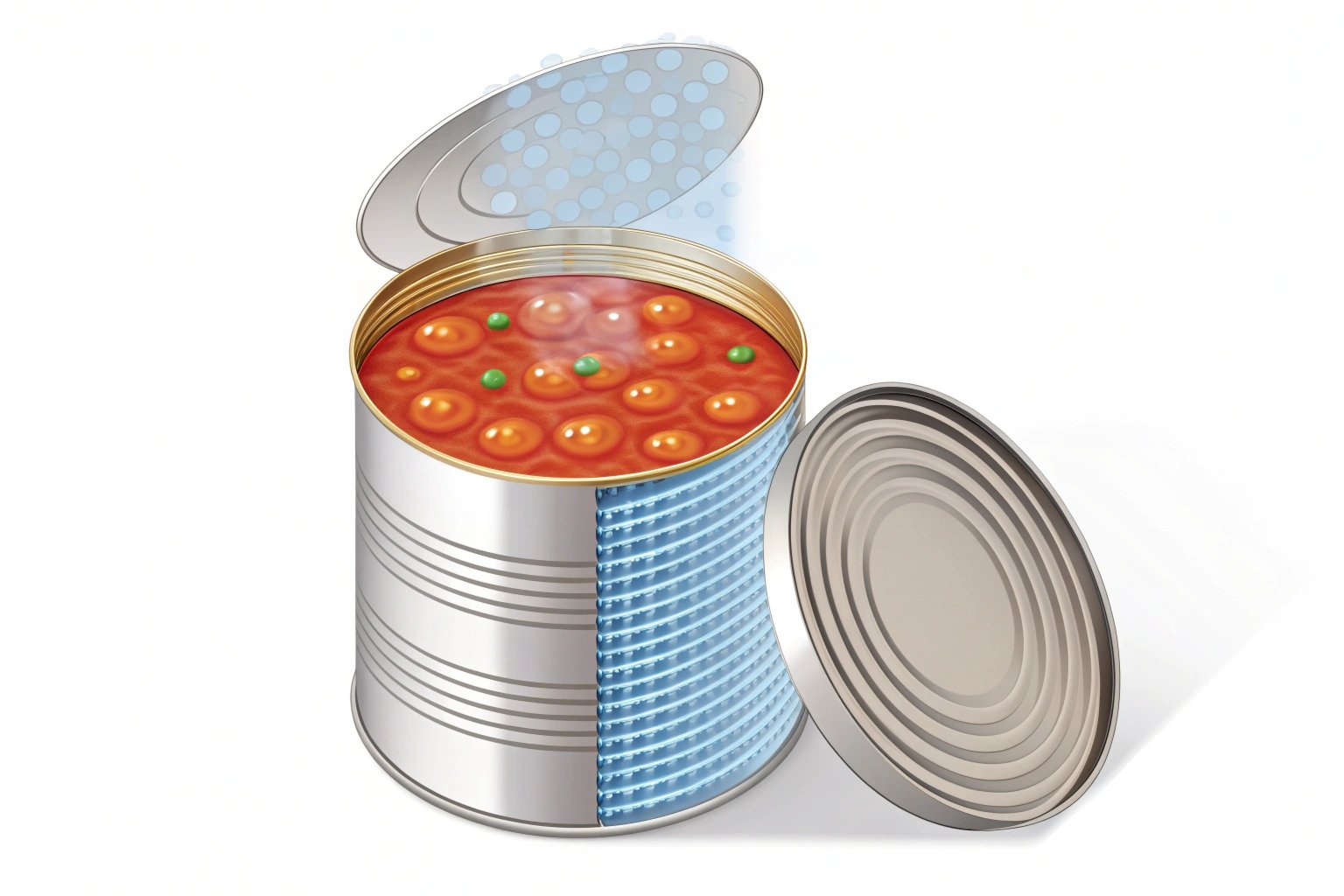
We take this very seriously. Our materials pass SGS and FDA tests 6 because we ensure total "solvent release." If the oven isn’t hot enough at the start of the cycle, the surface of the lacquer "skins over" and traps solvents inside. Later, when you cook the can at 121°C, those solvents burst out. This is why our curing process uses a gradual ramp-up in temperature to let the coating "breathe" 7 before it hardens.
Preventing "Off-Flavors"
Have you ever opened a can of water or light syrup and noticed a "plastic" taste? That is migration. By using high-performance epoxy-phenolic resins 8 and curing them at 190°C for exactly 12 minutes, we create a dense molecular matrix that keeps the chemicals locked away from your food.
Comparison of Coating Systems
| Coating Type | Standard Cure Temp | Common Application | Migration Risk if Under-Cured |
|---|---|---|---|
| Epoxy-Phenolic | 180-205°C | General Food/Meat | High (Phenolic release) |
| Organosol | 190-200°C | Highly Acidic Foods | Medium (Solvent retention) |
| BPA-NI (Non-Intent) | 200-210°C | Modern Safety Standards | High (Requires precise heat) |
Does the factory use automated temperature controls for curing ovens?
I remember the "old days" when operators adjusted gas valves by hand. It was a disaster. Today, if a factory isn’t using automated PLC (Programmable Logic Controller) systems, I tell my clients to run the other way. You cannot manage 60 billion pieces of annual capacity with manual labor.
Modern factories use automated sensors to monitor "Peak Metal Temperature" (PMT) in real-time. These systems automatically adjust line speed and burner intensity to maintain a constant thermal profile, ensuring that every bottom end receives the exact energy needed for full polymerization.
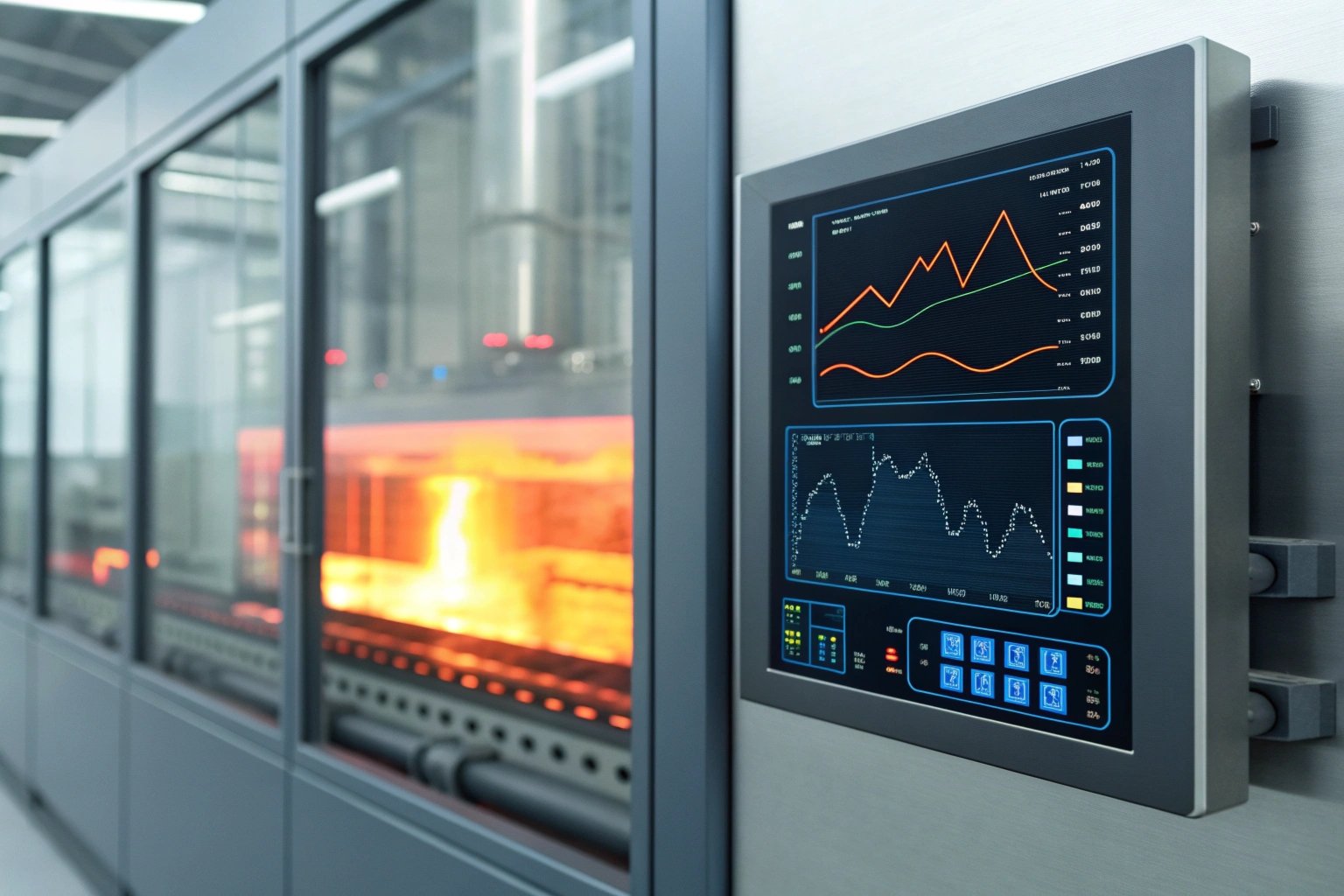
At Huajiang, we don’t just measure the air in the oven; we measure the steel itself. Our automated PLC systems 9 are the reason we can offer prices 5-8% lower than competitors while maintaining better quality. The automation reduces waste and energy costs. For a procurement director, this means you get a more stable price and a product that never varies from the first pallet to the last.
The Role of PMT (Peak Metal Temperature)
The air temperature in an oven is not the same as the metal temperature. Tinplate reflects heat. Our automated systems use infrared sensors 10 to make sure the steel actually hits 200°C. If the metal doesn’t reach the target, the computer triggers an alarm and stops the line. This "failsafe" approach is why we have been a trusted source for 27 years.
Why Automation is Essential for B2B
- Traceability: We can provide a digital heat chart for every batch you buy.
- Efficiency: Automated ovens start up faster and waste less gas.
- Safety: It eliminates human error, which is the cause of 90% of coating failures.
Conclusion
Mastering the curing process is the only way to guarantee a safe, corrosion-resistant tinplate end. By focusing on temperature stability and automation, we protect your food and your business from costly failures.
Footnotes
1. Standardized method for assessing coating resistance through solvent rub cycles. ↩︎
2. Technical overview of rollers used to seal tinplate ends onto can bodies. ↩︎
3. Professional metal printing and coating equipment used in high-volume production. ↩︎
4. Analysis of the chemical layer that provides corrosion resistance in tinplate. ↩︎
5. Engineering principles of industrial conveyor ovens for uniform heating. ↩︎
6. Global standards for testing materials that come into contact with food. ↩︎
7. Scientific explanation of how chemical solvents escape during the heating process. ↩︎
8. Detailed properties of resins commonly used for internal can coatings. ↩︎
9. Information on programmable logic controllers used to automate industrial machinery. ↩︎
10. Principles of non-contact temperature measurement in industrial environments. ↩︎