
You are worried about a product recall. It is a nightmare scenario for any food brand. You wake up at night thinking about heavy metals leaking into your canned fruit. You wonder if your supplier is telling you the truth about safety standards. I have seen this fear many times in my 27 years in this industry.
Yes, my Electrolytic Tin Plate (ETP) fully meets FDA food-contact requirements. I produce materials that comply with strict safety regulations, specifically 21 CFR 175.300. I ensure that the steel base, the tin coating, and any organic lacquers are safe for direct contact with food. I prioritize safety so you never have to worry about the integrity of your cans.
However, simply saying "yes" is not enough in our business. You need proof, and you need to understand how we verify this. In the global food market, regulations are strict. If you buy from me, you are not just buying steel sheets. You are buying a safety guarantee. We need to look at how we prove compliance, how we test for safety, and how we handle global standards.
How can I verify your FDA compliance for the US market?
When you import materials for food packaging, customs officers and quality auditors do not just take your word for it. They demand documents. If you lack the right paperwork, your containers get stuck at the port. This costs you money and damages your reputation with your customers.
I provide a clear path to verification for every order. I cross-reference my materials against the FDA’s "Positive List" found in 21 CFR Parts 174-186. If a specific coating is new, I ensure a Food Contact Notification (FCN) is filed. I give you the documentation that links my raw material directly to these federal regulations.

To understand verification, you must understand how the FDA works. The FDA does not "approve" a specific steel mill in China in the same way they approve a new drug. Instead, they set rules for materials.
There are two main ways I help you verify that my tinplate is safe for the US market.
First, we use the Positive List approach. The US Code of Federal Regulations 1 (CFR) has a list of substances that are allowed to touch food.
- The Steel Base: Iron is generally recognized as safe.
- The Tin Coating: High-purity tin is standard for food contact.
- The Passivation Layer: This is the thin chemical treatment on top. We check that the chromium used here is within limits.
- Organic Coatings (Lacquers): If you buy printed or lacquered tinplate from my factory in Fujian, this is the most critical part. We use coatings (like epoxy or polyester) that are explicitly listed in 21 CFR 175.300 2. This section covers "Resinous and polymeric coatings."
Second, there is the Food Contact Notification (FCN) system. Sometimes, a chemical company invents a new type of coating that isn’t on the old lists. In this case, the supplier must notify the FDA. If the FDA does not object within 120 days, it is legal to use. I only source coatings from top global suppliers (like PPG or Valspar) who have these Food Contact Notification 3 numbers ready.
When we sign a contract, I can provide a Declaration of Compliance 4 (DoC). This document states that the material complies with specific FDA sections. It connects the physical coil in your warehouse to the law on paper.
Documentation Checklist for Buyers
Here is a simple table to help you check if a supplier is ready for the US market.
| Document Name | Purpose | When You Need It |
|---|---|---|
| Material Safety Data Sheet 5 (MSDS) | Lists chemical components and safety handling. | Before shipping. |
| FDA Compliance Statement | Cites specific 21 CFR codes (e.g., 175.300). | During supplier audit. |
| SGS/Intertek Test Report | Third-party proof of heavy metal limits. | With every batch. |
| Coating Technical Data Sheet (TDS) | Details the specific lacquer used (if applicable). | For new product development. |
Verification is not just about a piece of paper. It is about traceability. Because I have a massive stock of 100,000 tons of coils from big mills like Baosteel and Shougang, I can trace every sheet back to the furnace it came from. This traceability is your best defense during an audit.
Do you pass the heavy metal migration tests for acidic foods?
Acidic foods are the enemies of bad metal packaging. Things like tomato paste, pineapple slices, and pickles are aggressive. They try to dissolve the container. If the tinplate is poor quality, heavy metals like lead or cadmium can migrate 6 into the food. This is a massive health risk.
I take heavy metal testing very seriously because I know the risks of acidic foods. I ensure my products pass migration tests that simulate these harsh conditions. I test for Lead (Pb), Cadmium (Cd), and Arsenic (As) to ensure they are well below the limits set by both the FDA and Chinese National Standards.
Let’s dive deeper into why this matters and how we do it.
When you put high-acid food (low pH) into a can, the acid acts like a solvent. It attacks the wall of the can. If we use bare tinplate (without lacquer), the tin protects the steel. But if there are impurities in the tin or the steel, those impurities will leach out.
The "Big Three" Heavy Metals:
- Lead (Pb): This is the most dangerous. In the old days, cans were soldered with lead. Now, we use electric welding, so that risk is gone. However, lead can still exist as a trace impurity in the steel or tin. My sourcing from top mills ensures lead is almost non-existent.
- Cadmium (Cd): This is often found in poor-quality zinc or plating chemicals. It is toxic to kidneys.
- Arsenic (As): A poison that can naturally occur in iron ore.
How We Test (The Migration Test):
We do not just look at the metal sheet. We simulate cooking and storage.
- The Simulant: We use food simulants. For acidic foods, we often use 3% or 4% acetic acid (like vinegar).
- Condition: We soak the tinplate in this acid at high temperatures for a specific time (e.g., 2 hours at 60°C or 95°C). This mimics the sterilization process and months of shelf life.
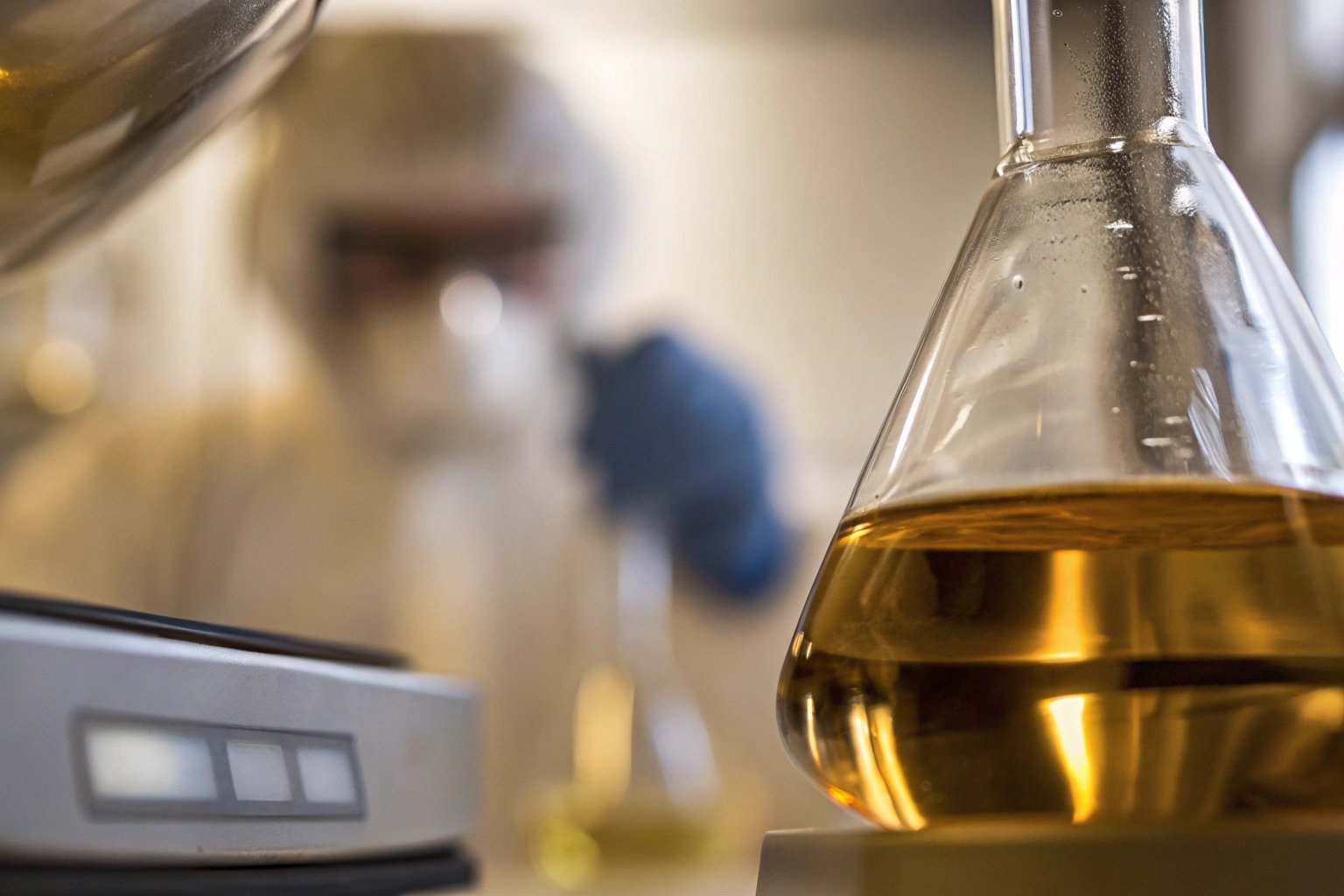
- Analysis: We take the acid and put it into a machine called an Inductively Coupled Plasma Mass Spectrometry 7 (ICP-MS). This machine counts the atoms of heavy metals.
For my clients packing items like tomato paste or mixed fruit, I often recommend a specific coating solution. While bare tinplate is safe, a proper internal lacquer adds a second barrier. My factory has 5 Fuji coating lines. We can apply a double layer of protection. This ensures that even if the acid attacks the first layer, the metal underneath stays sealed.
Common Heavy Metal Limits (Reference Only)
| Heavy Metal | FDA/General Limit (ppm) | Why it matters? |
|---|---|---|
| Lead (Pb) | < 0.01 mg/kg | Brain development, especially in kids. |
| Cadmium (Cd) | < 0.005 mg/kg | Kidney damage. |
| Arsenic (As) | < 0.01 mg/kg | Highly toxic carcinogen. |
| Mercury (Hg) | Non-detectable | Nervous system damage. |
Note: Limits vary by specific region and food type. Always check the latest local regulations.
By controlling the raw material source and testing the finished product, I prevent the risk of "migration." You get a can that holds the food, not one that poisons it.
Is your tinplate also compliant with EU 1935/2004 standards?
You might be selling to the US today, but what about Europe tomorrow? Or maybe your buyer has global standards. The European Union has some of the strictest food safety laws in the world. Many of my clients feel that if a product passes EU rules, it is safe for anywhere.
Yes, my tinplate and coatings are compliant with EU Regulation 1935/2004. I understand that European standards focus heavily on "Specific Migration Limits" (SML). I ensure that my products do not change the composition of the food or affect its taste and smell, which is a key part of the EU requirement.

The difference between the US FDA and the EU standards is interesting.
FDA (USA) tends to be "prescriptive." They have a list of ingredients. If you use ingredients from the list, you are mostly good.
EU (Europe) is "performance-based." They care about the final result. Their main rule, Framework Regulation (EC) 1935/2004, says three main things:
- Materials must not release components into food in levels harmful to human health.
- Materials must not change the composition of the food in an unacceptable way.
- Materials must not change the taste or odor of the food (Organoleptic deterioration).
To meet this, we have to look at Specific Migration Limits 8 (SML).
For example, if we use a Bisphenol-A (BPA) 9 based epoxy coating (which is becoming less common due to health concerns), the EU has a very strict limit on how much BPA can move into the food.
Because of these strict EU rules, I have seen a big shift in demand. Many of my European clients—and now clients in Mexico and South America—are asking for BPA-NI (Bisphenol-A Non-Intent) coatings.
At Huajiang, I work with coating suppliers to offer these BPA-NI options. This means we use polyester or acrylic coatings that are formulated without adding BPA. This makes the tinplate compliant with the strictest interpretations of EU law 10 (like the French ban on BPA).
FDA vs. EU Standards Comparison
| Feature | FDA (USA) | EU (Europe) |
|---|---|---|
| Core Regulation | 21 CFR 175.300 | (EC) No 1935/2004 |
| Approach | Positive List (Ingredients) | Migration Limits (Performance) |
| Key Test | Extraction test (Solvents) | Migration test (Simulants) |
| Focus | Chemical safety | Safety + Taste/Odor changes |
| BPA Stance | Allowed with limits | Restricted (Banned in some countries like France) |
I help you navigate this. If you tell me your final market is Germany, I will adjust the coating recommendation. If it is for the US, I ensure the FDA paperwork is ready. We are a global supplier, so we have to speak the "language" of global standards.
Can you send me the latest SGS food safety report for this batch?
You have heard promises before. "Trust me, it is good quality," says the salesman. But when the container arrives, the coating is peeling, or the metal is rusting. You cannot run a business on promises. You need independent verification for the specific goods you are buying right now.
I will send you a fresh SGS or Intertek report with your order if you require it. I believe in total transparency, so I do not hide behind old reports from five years ago. I want you to see the test results for yourself, covering heavy metals and coating integrity, so you can sleep well at night.

Why is a "fresh" report so important?
In the steel industry, raw materials change. A batch of iron ore from one mine might be different from another. A coating formula might have a slight adjustment.
Many traders will show you a "Reference Report." This is a test they did in 2019. They keep sending this same PDF to every customer for five years. That is dangerous. That report does not represent the coil sitting in your container today.
The Huajiang Difference:
We are a manufacturer with huge volume. Because we produce so much (60 billion lids/ends a year!), we are constantly testing.
- Internal Lab: We have our own lab in the factory. We test every master coil for hardness, tin coating weight, and lacquer adhesion.
- External Lab (SGS/TUV): For critical food safety parameters, we send samples to third-party labs.
What to look for in the report I send you:
- Sample ID: Does it match the batch number on your invoice?
- Test Date: Is it recent (within the last year or relevant to the production date)?
- Test Method: Did they use the correct method (e.g., US FDA 21 CFR 175.300 for coatings)?
- The Result: Look for "ND" (Not Detected) or "Pass."
We also focus on Consistency.
My typical customer, like Carlos, worries about variations. He hates it when one container is good and the next one causes "swollen cans" (fat cans).
Because I keep 100,000 tons of substrate in stock, I can hold the same quality standard for a long time. I don’t have to switch to a cheap, unknown mill just to fill an order. This consistency makes the testing reports reliable. When you get a report from me, it represents the stable quality of a true industry leader.
If you need a specific test—for example, a "pack test" for high-sulfur food (like fish or corn) to check for sulfur staining—we can arrange that too. We are technical partners, not just sellers.
Conclusion
Ensuring food safety is the most important part of my job. My electrolytic tin plate meets FDA and EU requirements because I use high-quality raw materials, advanced Fuji coating lines, and rigorous third-party testing. You do not have to guess about safety; I provide the proof you need.
Would you like me to email you a sample FDA compliance report and our latest heavy metal test results so you can review them with your quality team?
Footnotes
1. Official database of US federal regulations for manufacturing. ↩︎
2. Specific FDA rules regarding resinous and polymeric coatings. ↩︎
3. FDA inventory of effective food contact substance notifications. ↩︎
4. Standard document confirming material adherence to specific regulations. ↩︎
5. Official OSHA guidelines for chemical safety documentation. ↩︎
6. Scientific study on metal leaching risks in food. ↩︎
7. Standard scientific method for detecting heavy metal traces. ↩︎
8. Overview of chemical migration limits in food packaging. ↩︎
9. Health information regarding BPA exposure and risks. ↩︎
10. Official text of the European framework regulation 1935/2004. ↩︎