

I know the feeling of staring at a calendar as the harvest season approaches. You have tons of tomatoes or fruit waiting to be picked. The last thing you need is a production line that stops because you ran out of cans. In my 27 years at Huajiang, I have seen this anxiety many times.
High-speed stamping is the only way to meet the explosive demand of the food industry. By using multi-lane presses and continuous coil feeding, we can produce over 6 billion ends annually. This speed ensures that when your peak season hits, we have the volume ready to ship immediately.
But speed is meaningless if the lids do not fit your cans. A fast machine making bad products is just a way to lose money quickly. You need to understand how we balance this massive output with the precision your can seamers 1 require. Let’s look at how modern manufacturing solves your supply chain headaches.
Can the supplier’s stamping speed keep up with my harvest season demand?
I remember a client from Mexico calling me in a panic last June. His local supplier had a machine breakdown right before the tomato harvest. He asked if I could fill the gap. It is a terrible position to be in, and I never want my partners to feel that stress.
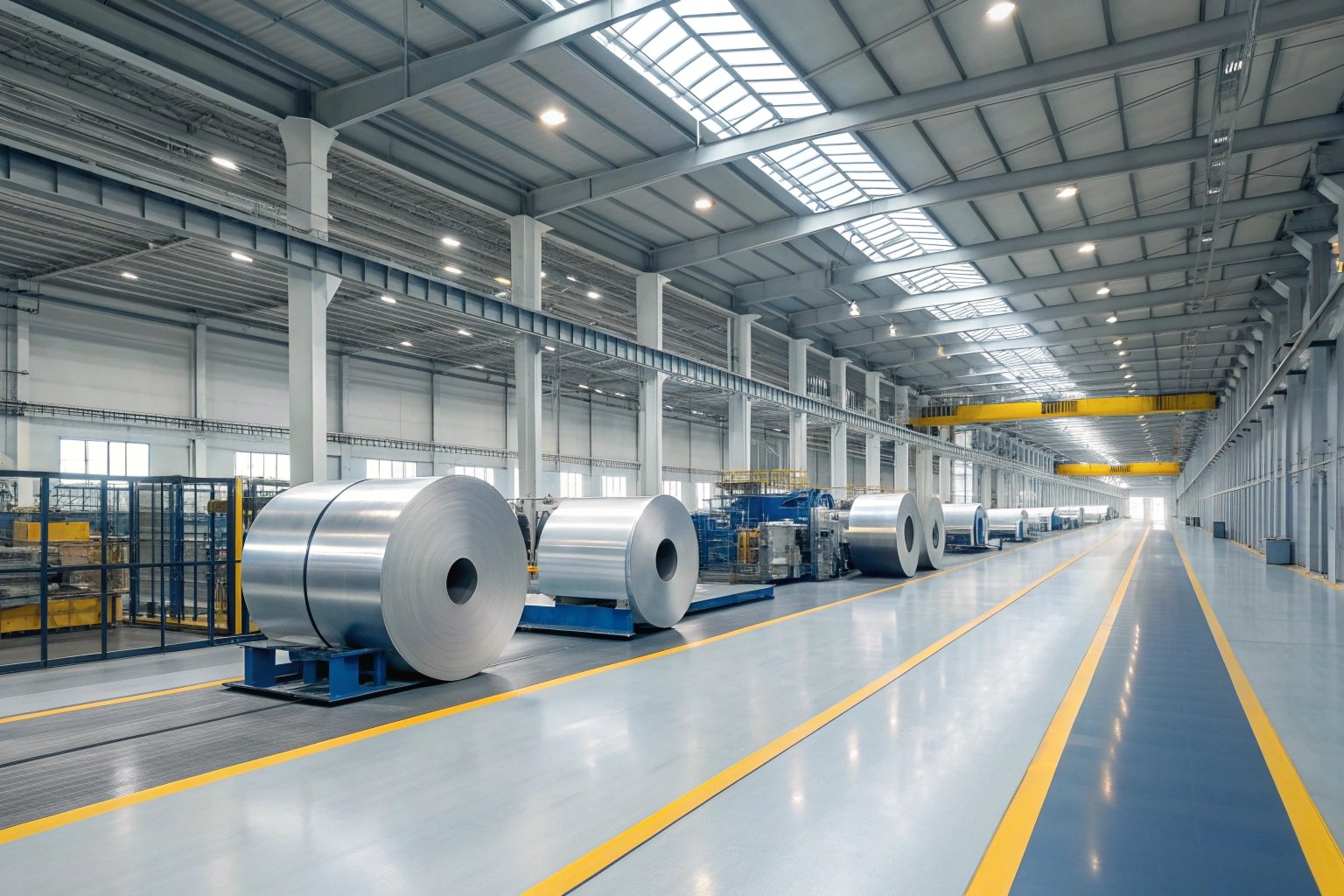
The answer lies in our equipment capability and raw material reserves. With high-speed presses running at 200 to 300 strokes per minute, combined with our 100,000-ton coil inventory, we can ramp up production instantly. We do not wait for steel mills; we start stamping the moment you confirm the order.

To understand how we meet massive demand, you have to look at the mechanics of the line. It is not just one punch hitting one piece of metal. We use what is called "multi-out tooling" 2. Imagine a cookie cutter that cuts four or six cookies at once instead of one. Our presses do this with steel.
A standard press might hit the metal 200 times a minute. If that press has a 4-out die, it produces 800 ends every minute. That is 48,000 ends per hour from just one machine. At Huajiang, we have dozens of these lines running in parallel. This is how we reach that 6 billion annual capacity.
The Role of Scroll Shearing
Before the stamping even begins, we use a process called scroll shearing 3. We do not feed a straight strip of metal into the press. That would waste too much material between the circles. instead, we cut the sheet in a zigzag pattern. This "nesting" technique saves 3% to 8% of the material. It sounds small, but over millions of cans, it saves huge costs. More importantly, it allows the press to run continuously without stopping to reload frequently.
Inventory as a Buffer
Machinery speed is only half the battle. The fastest car cannot drive without gas. In our industry, "gas" is the tinplate coil. Many smaller factories work on a "Just-in-Time" 4 model. They order steel only after you order lids. If the steel mill delays, you wait. Because we stock 100,000 tons of coil from BaoSteel and Shougang, we bypass this delay. We act as a reservoir for your business.
Comparative Output Data
Here is a simple breakdown of how modern technology changes the output game:
| Feature | Traditional Stamping | Modern High-Speed Stamping |
|---|---|---|
| Strokes Per Minute (SPM) | 60 – 100 | 200 – 300+ |
| Cavities (Lanes) | Single (1) | Multi (4, 6, or more) |
| Daily Output (1 Line) | ~50,000 ends | ~300,000+ ends |
| Material Feed | Sheet-by-sheet (Manual) | Continuous Coil (Auto) |
This difference is why we can say "yes" to emergency orders during your harvest season. We have built a system designed for surges, not just steady trickles.
Does high-speed stamping compromise the dimensional accuracy of ends?
You might worry that going fast means getting sloppy. I have heard customers ask if "high-speed" means the curl height will vary or the countersink depth will fluctuate. In the canning world, a variance of a few microns can cause a "fat can" or a dangerous leak.
Surprisingly, high-speed stamping actually improves accuracy compared to older, slower methods. We use high-precision servo feeders that position the metal within ±0.05mm for every stroke. The momentum and rigidity of modern presses ensure that every lid is identical to the one before it.
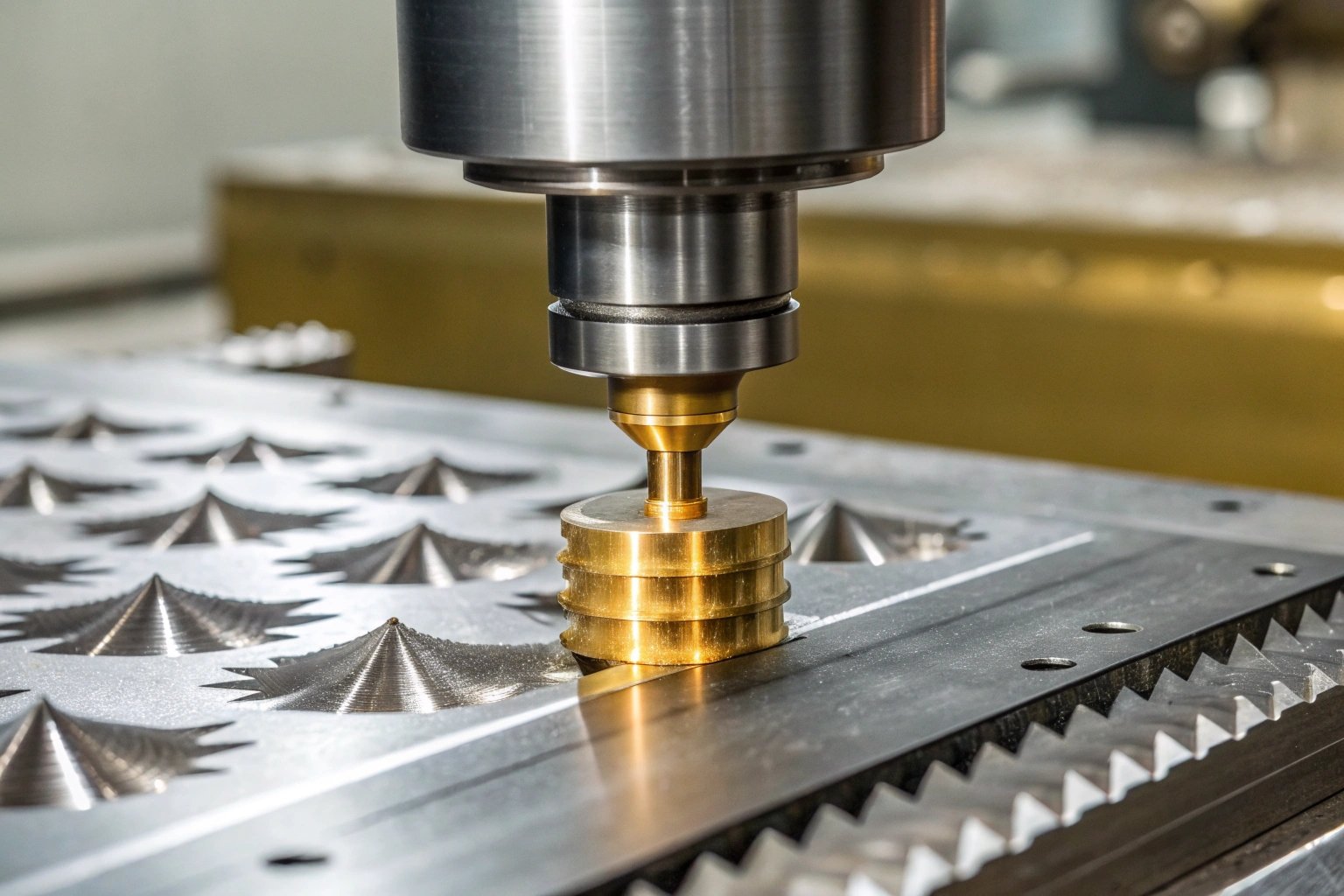
Let’s dive into the physics of this. In the past, operators hand-fed sheets into a press. Humans get tired. Humans shake. This caused slight variations in where the die hit the metal. Today, everything is computer-controlled.
The Power of Carbide Tooling
The secret weapon in maintaining accuracy at high speed is the material of the die itself. We use Tungsten Carbide 5. This material is incredibly hard. It does not wear down easily. A standard steel die might start to lose its sharp edge after 500,000 hits, creating burrs or rough edges on your lids. Carbide dies can run for millions of hits with zero change in dimension.
Thermal Control
When you hit metal 300 times a minute, you generate friction. Friction creates heat. Heat makes metal expand. If we ignored this, the dies would expand, and your lids would be slightly larger at the end of the shift than at the start.
We solve this with active temperature control. We circulate cool oil through the press. We monitor the temperature of the die set. This keeps the thermal expansion 6 predictable and controlled.
Why Rigidity Matters
Modern high-speed presses are heavy. They are built like tanks. This weight is necessary to absorb the shock of the impact. If the machine vibrates, the accuracy drops. Our presses are designed to be rock-solid. This rigidity ensures that the punch enters the die perfectly straight, every single time.
Tolerance Standards
We hold our products to extremely tight standards. Here is what we aim for:
| Measurement Parameter | Standard Tolerance | High-Speed Precision Achieved |
|---|---|---|
| Curl Diameter | ± 0.15 mm | ± 0.05 mm |
| Countersink Depth | ± 0.15 mm | ± 0.08 mm |
| Metal Thickness | ± 0.01 mm | ± 0.005 mm |
By controlling these variables, we ensure that when our ends reach your seamer in Mexico or Spain, they flow through your machine without jamming. Speed at our factory translates to efficiency at your factory.
What is the lead time for a 40HQ container of stamped ends?
I know that in international trade, "production time" is only one part of the equation. You care about when the container arrives at your port. You have shipping schedules to book and warehouse space to clear. You need a date you can trust.
Generally, our lead time for a 40HQ container is 15 to 20 days from the moment you sign the contract. However, because we are a fully integrated manufacturer—doing our own printing and lacquering—we can often cut this down to 10 days for urgent orders using stock materials.

Let’s break down where the time actually goes. Many buyers think stamping takes the longest time. It actually does not. As we discussed, stamping is incredibly fast. The time is usually spent on preparation and coating.
The Production Timeline
- Coil Prep (1-2 Days): We pull the master coil from our warehouse. We cut it into scroll sheets.
- Coating and Printing (3-5 Days): This is the most critical step for food safety 7. The metal sheets must be coated with lacquer (gold, clear, or aluminized) and cured in long ovens. If you need a printed logo, this happens here. This step cannot be rushed because the coating needs to cure properly to pass the "Rub Test" and sterilization tests.
- Stamping (2-3 Days): Once the sheets are ready, the high-speed presses finish the job very quickly.
- Lining and Drying (2 Days): The stamped ends go through a machine that applies the sealant compound in the curl. This also needs oven time to dry.
- Packing (1-2 Days): We stack the ends in paper sleeves and load them onto pallets.
The "One-Stop" Advantage
The reason many suppliers have long lead times (30-40 days) is that they outsource the printing. They have to truck the metal to a printing factory, wait in line there, and truck it back.
At Huajiang, we have 5 coating and printing factories on our own campus. We control the schedule. If your order is urgent, I can walk to the printing manager and prioritize your sheets. We eliminate the transportation time between processes.
Typical Lead Time Breakdown
| Process Step | Standard Supplier (Outsourced Printing) | Huajiang (Integrated) |
|---|---|---|
| Material Procurement | 10-15 Days | 0 Days (In Stock) |
| Printing/Coating | 10-15 Days | 3-5 Days |
| Stamping/Lining | 5-7 Days | 3-5 Days |
| Total Lead Time | 25-40 Days | 10-20 Days |
This speed gives you the flexibility to react to market changes. If the price of sardines spikes and you need more packaging fast, we can support you.
How does the factory ensure quality control at high production speeds?
It is a scary thought: if a machine makes 3,000 ends a minute, it could also make 3,000 defective ends a minute if something goes wrong. A tiny scratch on the lacquer could lead to rust. A missing compound could lead to botulism.
We do not rely on human eyes to catch defects at this speed. We use Automated Optical Inspection (AOI) cameras on every single line. These cameras take a picture of every end, checking for pinholes, scratches, and compound integrity. If a defect is found, an air jet instantly kicks that piece out.

In the old days, quality control meant taking 10 lids every hour and measuring them with calipers. That is statistical sampling. It is good, but it is not perfect. It leaves room for error between the checks.
The Eye That Never Blinks
Our online camera systems are located right after the stamping and lining stations. They look for specific things:
- The Light Test: The camera looks for light passing through the metal. If it sees light, there is a pinhole. The end is rejected.
- Compound Check: The camera measures the width and placement of the sealant ring. If the ring is broken or too thin, it is rejected.
- Surface Defects: The camera detects scratches or grease spots that could affect the food inside.
Destructive Testing
Cameras are great, but they cannot test everything. We still perform rigorous destructive tests in our lab every few hours.
- Enamel Rating: We put the end in a saline solution and run an electric current through it. This measures if there are any microscopic breaks in the lacquer that the eye cannot see. We use a dedicated high voltage detector 8 for this. This is crucial for high-acid foods like tomato paste.
- Pressure Test: We seal the end onto a test can and pump it with air until it bursts. This ensures the "buckle pressure" meets the standard.
Traceability
Every pallet we ship has a barcode 9. This code links back to the specific coil of steel, the specific press that stamped it, and the specific shift that packed it. If you ever have an issue in your factory, we can trace it back to the source in minutes. This is the level of accountability that global buyers demand.
Technical Support
We also know that sometimes the issue is not the lid, but the seamer settings. My team understands technical diagnostics 10. We can help you determine if a problem is due to the "chuck" fit or the "roll" tightness. We solve problems together, rather than just selling you a product.
Conclusion
Mass producing tinplate ends is a balance of brute force and delicate precision. You need the raw speed to fill containers quickly, but you need the technological discipline to ensure every piece is safe for food. At Huajiang, we use our 100,000-ton inventory and advanced AOI systems to give you both. We take the risk out of your supply chain so you can focus on your harvest.
Footnotes
1. Understanding the machinery used to seal lids onto cans. ↩︎
2. Technique for producing multiple parts per single press stroke. ↩︎
3. Method of cutting metal to minimize scrap waste. ↩︎
4. Inventory strategy to increase efficiency and decrease waste. ↩︎
5. Material known for extreme hardness and durability in tooling. ↩︎
6. Physics of material changing shape due to heat transfer. ↩︎
7. Global standards for handling food contact materials safely. ↩︎
8. Industry equipment used to test coating integrity on metal. ↩︎
9. Machine-readable codes used for tracking supply chain products. ↩︎
10. Process of identifying the cause of technical faults. ↩︎