
I recall a frantic call from a purchasing manager in California who had just received ten containers of "401" bottom ends from a general trader, only to find they wouldn’t feed through his Angelus seamer 1. The ends were technically 99mm wide, perfect for a specific European can, but they were useless for his standard US 401 salmon cans, halting his production right in the middle of the catch season.
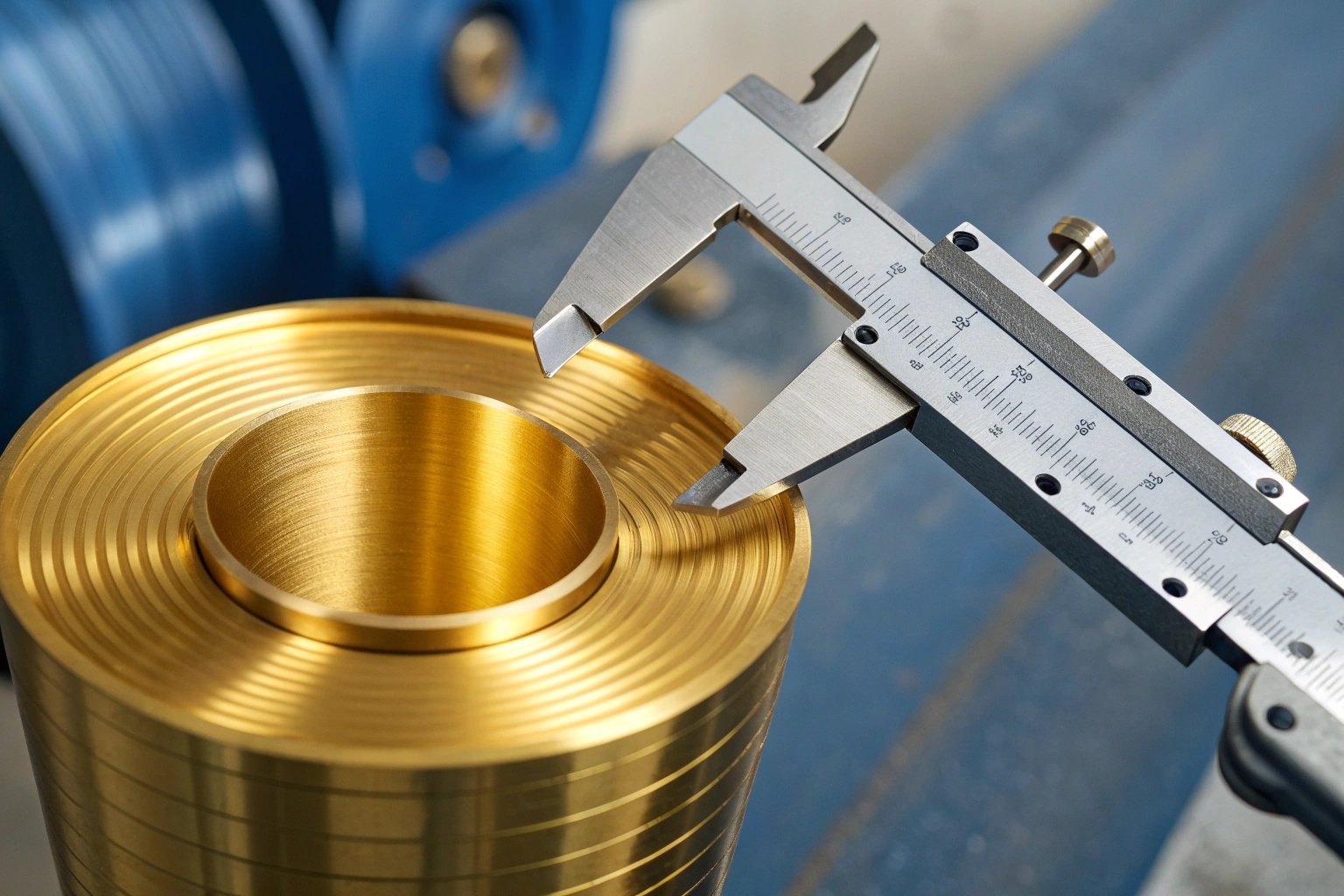
To match tinplate bottom ends to US cans, you must convert the imperial "000" code (where the first digit is inches and the last two are sixteenths) into precise millimeters with a tolerance of ±0.05mm. A "401" end is strictly 4-1/16 inches (103.19mm), and using a generic metric approximation will result in seaming failures and potential food spoilage.
This is not just a matter of "close enough." In the high-speed world of canning, a fraction of a millimeter is the difference between a safe product and a costly recall. As a manufacturer in Fujian with 27 years of experience exporting to the US, I see these conversion issues daily. We have developed specific protocols to ensure our metric machinery produces ends that fit your imperial tooling perfectly.
How do I convert metric tinplate sizes to imperial for my US orders?
It feels overwhelming when you are staring at a spec sheet filled with fractions like 7/16 or 11/16, trying to figure out if the metric stock offered by a supplier will actually fit your canning line. You might worry that a calculation error now will lead to thousands of dollars in wasted metal later.
The standard US can sizing system uses a three-digit code: the first number represents whole inches, and the second and third numbers represent sixteenths of an inch. To convert this to metric, take the whole inches plus the fraction, and multiply the total by 25.4. For example, a 307 end is 3 + 7/16 inches, which equals 87.31mm.
Understanding this "Can Maker’s Code" is the foundation of global sourcing. It allows you to communicate effectively with factories like ours in China, ensuring that the "300" can you order is actually 3 inches wide, not 300 millimeters.
Decoding the Imperial System
The US system is unique and dates back to the early days of industrial canning. It is not intuitive if you are used to the metric system, but it is consistent.
- The First Digit: This is the Inches.
- The Last Two Digits: These are 1/16ths of an inch.
Let’s look at a practical example using the 303 can, which is very common for vegetables like peas or corn.
1. 3 = 3.0 inches.
2. 03 = 3/16 of an inch (0.1875 inches).
3. Total Imperial Diameter = 3.1875 inches.
4. Convert to Metric: 3.1875 × 25.4 = 80.96mm.
If you were to simply ask for an "80mm" lid, it would be too loose. If you asked for an "81mm" lid, it might jam. The precision must be exact.
Standard Size Reference Table
At Huajiang, we have mapped all these standard US codes to our production tooling. Here is a guide to help you check your current requirements.
| US Can Code | Imperial Fraction | Decimal Inches | Exact Metric (mm) | Typical Application |
|---|---|---|---|---|
| 200 | 2-0/16 | 2.000 | 50.80 | Small Juice / Mushrooms |
| 202 | 2-2/16 | 2.125 | 53.98 | Beverage / Beer |
| 211 | 2-11/16 | 2.6875 | 68.26 | Soup / Condensed Milk |
| 300 | 3-0/16 | 3.000 | 76.20 | Beans / Baked Goods |
| 307 | 3-7/16 | 3.4375 | 87.31 | Vegetables / Fruits / Tuna |
| 401 | 4-1/16 | 4.0625 | 103.19 | Pet Food / Seafood / Pineapple |
| 603 | 6-3/16 | 6.1875 | 157.16 | Institutional (No. 10 Can 2) |
The Importance of "Chuck Fit" vs. Nominal Size
Here is where it gets tricky, and where a lot of buyers get burned. The dimensions above are the Nominal dimensions (roughly the diameter of the can body). However, the End (Lid) you buy from us needs to have a specific Curl Diameter and Countersink Diameter to fit the seaming chuck 3 on your machine.
For a 307 can, the body is ~87.31mm. But the lid’s curl diameter (the outer edge) is usually around 96mm to 97mm so it can wrap around the flange.
- If you order based strictly on the nominal number without checking the Countersink Diameter, the lid might sit on the can, but the chuck won’t fit into the "cup" of the lid.
- We need to match the B-dimension (countersink diameter) to your specific tooling.
When you send an inquiry to Huajiang, don’t just say "I need 307 ends." Tell us: "I need 307 ends, and my seaming chuck diameter is 83.3mm." This allows us to select the correct mold from our inventory.
Will a slight metric difference cause seaming issues on my line?
I have stood on factory floors and watched line operators curse as can after can gets crushed or fails to seal. The instinct is to blame the machine, but often the purchasing manager asks me, "Chase, the difference is only 0.1mm, does it really matter?"
Yes, a slight metric difference will absolutely cause seaming issues. The double seam process relies on precise geometry; if the end’s curl width or countersink depth deviates even by 0.1mm, the body hook and cover hook will not interlock properly, leading to "false seams" or leakage.

The double seam process 4 is a mechanical lock. It is not welded; it is folded. If the paper (the tinplate) is the wrong size, the fold won’t hold.
The Anatomy of a Mismatch
When a US seamer (like an Angelus or Ferrum) runs at 400 or 600 cans per minute, it is expecting the lid to be in an exact position.
1. Countersink Depth Issue: US specs often call for a depth of roughly 0.120" to 0.140". If our metric production is slightly shallower (say, converted poorly to 3.0mm instead of 3.5mm), the seaming chuck will bottom out on the panel. This pushes the lid down too hard, causing "paneling" or buckling.
2. Curl Width Issue: The curl contains the sealing compound (the rubber-like liner). If the curl is too narrow because of a rounding error (e.g., measuring 7mm instead of 0.280" which is 7.11mm), there isn’t enough metal to form a good Cover Hook.
3. Seaming Clearance: The gap between the chuck and the roller is set to the thousandth of an inch. A metric lid that is slightly "oversized" will jam the machine.
The Consequence: The False Seam
The most dangerous result of mismatched sizes is the False Seam.
- What it is: The can looks sealed. The rollers have flattened the metal.
- The Reality: The body hook and cover hook missed each other. They are just pressed together, not hooked.
- The Risk: As soon as the can is retorted 5 (heated) or bumped during shipping, the seal pops open. Bacteria enters. This is a nightmare for food safety liability.
Critical Seam Parameters Comparison
To prevent this, we convert the target values for the finished seam into our manufacturing tolerances.
| Seam Parameter | Typical Imperial Target (inch) | Equivalent Metric Target (mm) | Impact of Deviation |
|---|---|---|---|
| Seam Length (Width) | 0.118 – 0.125 | 3.00 – 3.18 | Too wide = Loose rolls |
| Body Hook | 0.075 – 0.085 | 1.90 – 2.16 | Too short = Poor overlap |
| Cover Hook | 0.075 – 0.085 | 1.90 – 2.16 | Too short = Leakage |
| Overlap % | > 50% | > 1.1 mm (Calculated) | Safety Critical |
At Huajiang, we use computerized video seam monitors to check our pilot runs. We don’t just measure the lid; we simulate the seam. If the metric conversation results in a Cover Hook that is consistently on the low side (e.g., 1.85mm), we reject the batch and adjust the die. We respect the "0.002 inch" rule even in our metric factory.
What common conversion mistakes should I avoid when ordering ends?
I want to help you avoid the expensive lessons I’ve seen others learn the hard way. One of my clients in Europe once bought "401" ends that were dimensionally perfect but made of the wrong steel temper, and the cans imploded during the cooling cycle of his retort process.
The most common mistakes include ignoring the steel temper (hardness) conversion, failing to verify the specific coating compliance for high-acid or high-sulfur foods, and confusing "Normal Ends" with "Easy Open Ends" which use different seaming setups. You must match the physical properties of the steel, not just the diameter.

Dimensions are only half the story. The material behavior—how it stretches, bends, and reacts to pressure—must also be translated from US standards to Chinese GB standards.
Mistake 1: The Temper Confusion (DR vs. T)
In the US, you might see a spec for Double Reduced steel 6 (DR-8). This stands for "Double Reduced" steel, which is stiff and strong, allowing for thinner gauges (saving money). In China, the terminology is different.
- If you just ask for "standard hardness," a trader might give you T-3 (Single Reduced).
- The Problem: T-3 is softer. If you use it for a large can like a 603 (Coffee/Catering) or a 401, the bottom might sag or "peak" (buckle outward) when the pressure builds up inside the can during sterilization.
- The Solution: You need to specify the yield strength 7. For DR-8, we use DR-550 or DR-580 in the Chinese standard.
Mistake 2: Coating Compatibility
In the US, FDA 175.300 8 is the bible for food contact coatings.
- Acidic Foods: (Tomatoes, Fruit Cocktail). These are aggressive. They eat into the metal. If you use a standard "General Purpose" Gold lacquer, the acid will perforate the tinplate. We need to use a specific Epoxy-Phenolic or Organosol coating.
- Sulfur Foods: (Meats, Corn, Peas). These release sulfur compounds during cooking, which turns the metal black. It’s harmless but looks terrible to the consumer. We need a Zinc-Oxide modified lacquer (often called "C-Enamel" or "Sulfur Resistant Gold").
- BPA-NI: Many US states (like California) prefer BPA-Non Intent 9. You must specify this, as standard epoxy still contains BPA.
Mistake 3: The Profile Trap (Beaded vs. Non-Beaded)
Look at the flat panel of the lid.
- Beaded: Has concentric rings stamped into it. This adds strength and allows the lid to flex (breathe) during retorting.
- Non-Beaded (Flat): Used for dry products or non-retort items.
If you order a flat lid for a retort process, it will likely deform permanently. Always send a photo of your current lid profile.
Material Grade & Temper Conversion Table
Here is how we translate your requirements into our production inputs.
| US Temper Code | Description | Chinese/Metric Equivalent (GB/T 2520 10) | Best For… |
|---|---|---|---|
| T-1 | Extra Soft | T-50 / T-52 | Deep drawn parts (rare for ends) |
| T-3 | General Purpose | T-57 | Standard vegetable cans (300, 307) |
| T-4 | Hard | T-61 | Stiff bodies, larger ends |
| DR-8 | Double Reduced | DR-550 | Cost savings, high strength, thinner gauge |
| DR-9 | Extra High Strength | DR-620 | Carbonated beverage bottoms (pressure resistant) |
Always ask for a sample sheet or a "try-out" batch if you are switching tempers. We can send you 100 ends via DHL for you to run through your seamer to check the "spring-back" of the metal.
Does the supplier provide technical drawings in both measurement systems?
I believe that a drawing is the only universal language in manufacturing. You might speak English or Spanish, and my engineers speak Chinese, but we all understand a CAD drawing—provided it is labeled correctly.
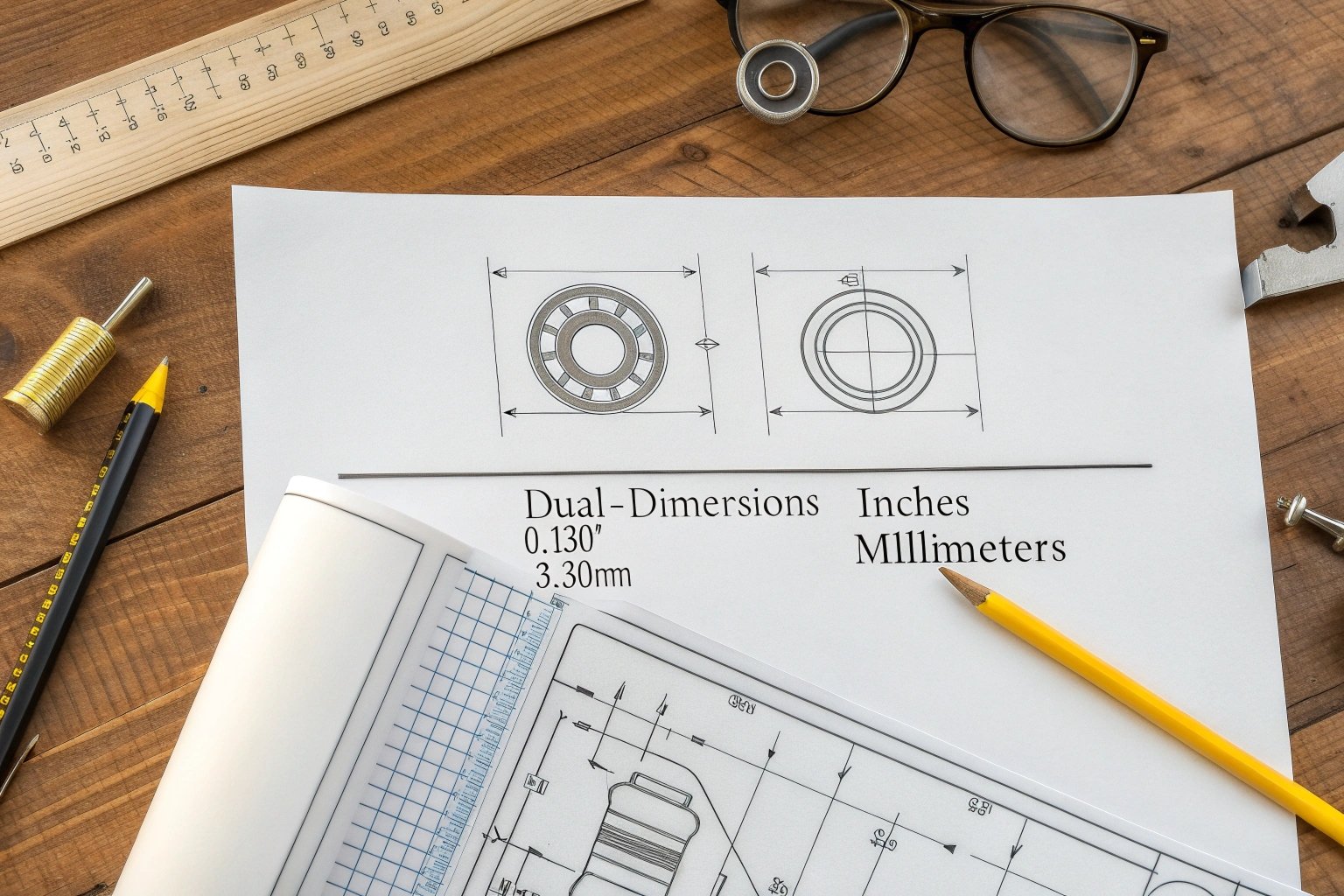
A professional supplier should always provide a technical confirmation drawing that explicitly lists dimensions in both Imperial (inches) and Metric (mm). This "dual-dimensioning" is the standard safety check to ensure your quality engineers and our production team are looking at the exact same specification before mass production begins.

At Huajiang, we do not start our presses until you have signed off on a "Specification Confirmation Sheet." This sheet is the bridge between your requirements and our factory floor.
The Role of the Technical Drawing
The drawing does more than just list the diameter. It defines the "Fit."
1. Step Geometry: Does the end have a "step" on the shoulder? This affects how the cans stack on the shelf.
2. Curl Height: This determines the volume of metal available for the seam.
3. Compound Placement: The drawing shows exactly where the sealing compound is injected. If it is too high up the wall, it squeezes out. If it is too low, it doesn’t seal.
How We Handle Dual-Dimensions
When we create a drawing for a US client like you, we use a specific format:
- Primary Unit: Inches (to match your reference).
- Secondary Unit: [Millimeters] in brackets.
- Example:
Countersink Depth: 0.130" [3.30mm] ± 0.004" [0.10mm]
This prevents the "rounding error" problem. Your engineer can verify the 0.130" against his chuck manual, and my QC manager can measure 3.30mm on the production line using his digital calipers.
The "Sign-Off" Process
We treat this process very seriously:
1. Drafting: Based on your sample or requested code (e.g., 300 Easy Open End), our R&D team drafts the profile.
2. Review: I review it personally to ensure the temper and coating specs are listed (e.g., "Stone Finish, Gold/Gold, T-3").
3. Customer Approval: You receive the PDF. You check it against your seamer specs.
4. Production: The signed drawing is printed and hung at the operator’s station. It becomes the "law" for that production run.
Quality Assurance Reports (QA)
Finally, when we ship the goods, we don’t just send a packing list. We send a QA Report that references these dual dimensions.
- Visual Inspection: No scratches, no compound skips.
- Dimensional Check: We record the average, min, and max of the curl diameter and countersink.
- Performance: We test the "Pop Pressure" (at what PSI does the easy open tab pop?) and the "Buckle Pressure" (at what PSI does the bottom end deform?).
This documentation trail allows you to prove to your own auditors (and the FDA) that you have exercised "Due Diligence" in your supply chain.
Conclusion
Successfully matching tinplate bottom ends to US cans is about precision translation—not just of language, but of dimensions (inches to mm), materials (Temper codes), and performance standards. By understanding the 1/16th coding system, respecting seaming tolerances, and demanding dual-dimension drawings, you can seamlessly integrate our cost-effective Chinese supply into your US operations.
Footnotes
1. Premier manufacturer of high-speed seaming machines for canning. ↩︎
2. Standard dimensions and volumes for the institutional #10 can. ↩︎
3. Critical tooling component that holds the can lid during seaming. ↩︎
4. Detailed explanation of the mechanical double seaming process. ↩︎
5. The process of heating foods in sealed containers for sterilization. ↩︎
6. Properties of stiffer, thinner steel used in modern packaging. ↩︎
7. Mechanical property defining when material deforms under stress. ↩︎
8. FDA regulations covering resinous and polymeric coatings for food. ↩︎
9. Overview of BPA-Non Intent chemicals in food contact materials. ↩︎
10. Chinese National Standard specification for cold-reduced tinplate. ↩︎