

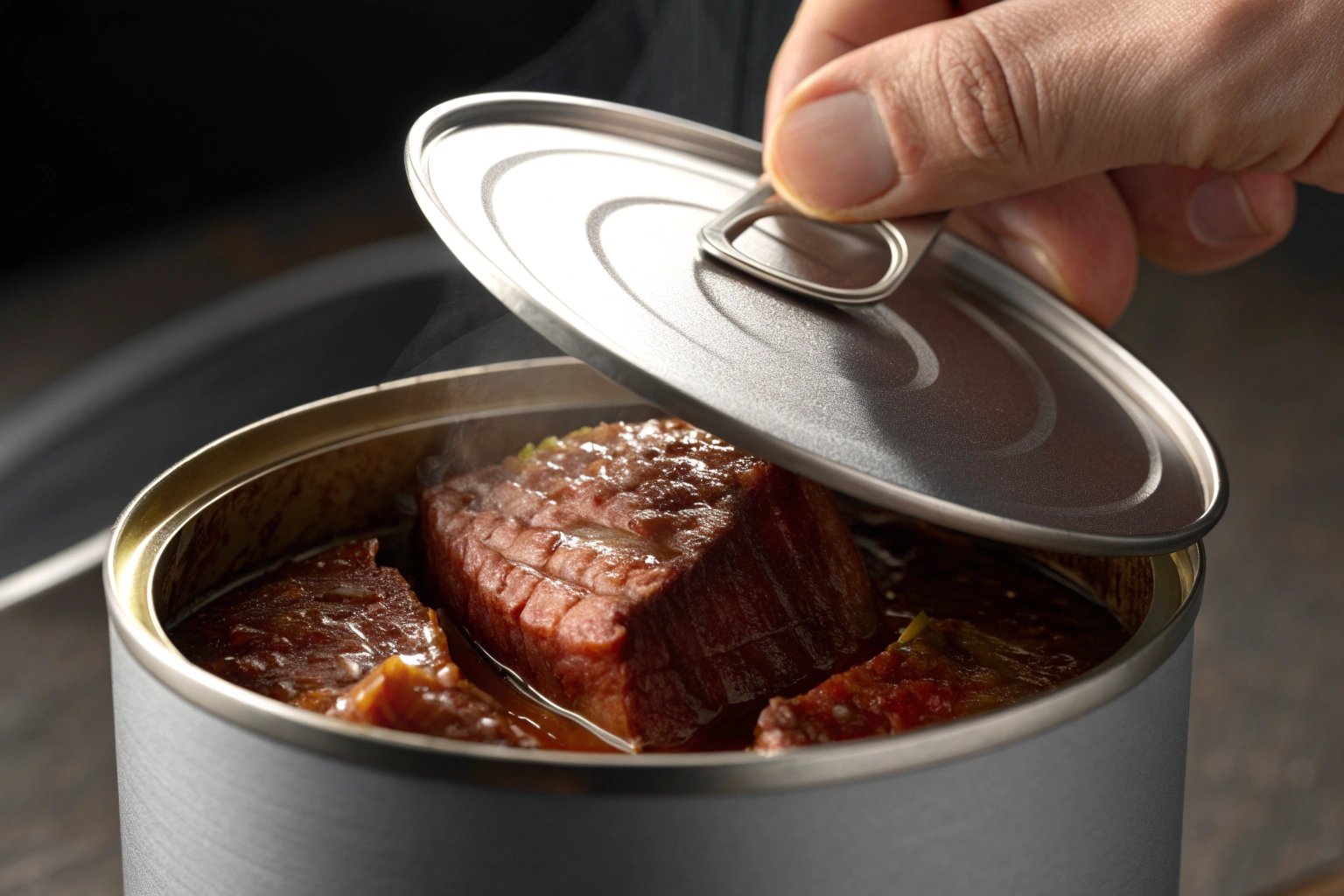
I hate opening a can of premium meat only to find ugly black stains on the metal lid. It makes the food look spoiled and ruins the trust I built with my customers.
Anti-sulfur tinplate uses specialized treatments and coatings on bottom ends to prevent black sulfide stains from reacting with sulfur in meat products during canning. These stains, often iron or tin sulfide, form in headspaces above high-sulfur foods like meat, degrading appearance and quality.
You do not have to settle for stained cans that scare away buyers. I will show you how choosing the right materials and coatings can keep your packaging clean and professional.
Why does my meat product cause black sulfide staining on the ends?
I once saw a whole batch of beef cans rejected because the inside of the ends turned jet black. It felt like a disaster, but the science behind it is actually quite simple.
Meat contains sulfur-rich amino acids that release hydrogen sulfide gas during high-heat sterilization. This gas reacts with the tin or iron in the can ends to form black tin sulfide or iron sulfide stains. Using anti-sulfur lacquers or specialized tinplate grades prevents this chemical reaction from occurring.
The Chemical Reaction Behind the Stain
When you cook meat inside a sealed can at temperatures above 121°C, the proteins break down. This process releases sulfur compounds like hydrogen sulfide 1 gas. In a standard tinplate can, the gas migrates to the headspace. When it touches the metal surface of the bottom end, a reaction occurs:
$$Sn + H{2}S \rightarrow SnS + H{2}$$
The resulting Tin Sulfide ($SnS$) is a dark brown or black precipitate. While it is generally considered safe for health, it looks like mold or rot to the average consumer. If the tin layer is thin or has pores, the sulfur reaches the steel base, creating Iron Sulfide ($FeS$), which is even darker and harder to wash off.
Factors Influencing Stain Severity
Not every meat can will stain the same way. The intensity depends on the "sulfur load" of the specific food and the processing conditions. I have noticed that high-protein seafood 2 and red meats are the most aggressive.
| Factor | Impact on Staining |
|---|---|
| Protein Content | Higher protein means more sulfur amino acids (Cysteine/Methionine). |
| Sterilization Temp | Temps over 125°C accelerate the breakdown of proteins. |
| Headspace Volume | More air trapped in the top increases the concentration of gas. |
| pH Level | Lower pH (more acidic) can sometimes change how sulfur reacts. |
Identifying the Difference Between Staining and Corrosion
It is important to distinguish between sulfur staining and actual rusting (oxidation). Sulfur staining is usually a flat, purple-black or blue-black film that does not pit the metal. Rust, however, eats into the steel. My customers often worry about safety, so I explain that while staining is an aesthetic issue, it signals that the protective barrier is not strong enough for the specific food type.
How effective are aluminized coatings in preventing sulfur stains?
I get asked a lot if switching to "silver" or aluminum-looking coatings is the magic fix for meat cans. In my experience, it is one of the most reliable ways to hide the problem.
Aluminized coatings work by creating a physical "shingle" barrier that prevents sulfur gas from reaching the metal substrate. The aluminum pigments within the lacquer do not react with sulfur to form black stains, keeping the inside of the can looking clean and bright even after high-heat processing.

The "Shingle" Effect of Aluminum Pigments
Standard clear lacquers are like a flat sheet of glass; if there is a tiny crack, the gas goes straight through. Aluminized coatings 3 use "leafing" aluminum flakes. These flakes overlap like shingles on a roof. This creates a very long and difficult path for sulfur molecules to travel. By the time the gas tries to reach the steel, the cooling process has usually begun.
Comparing Coating Performance
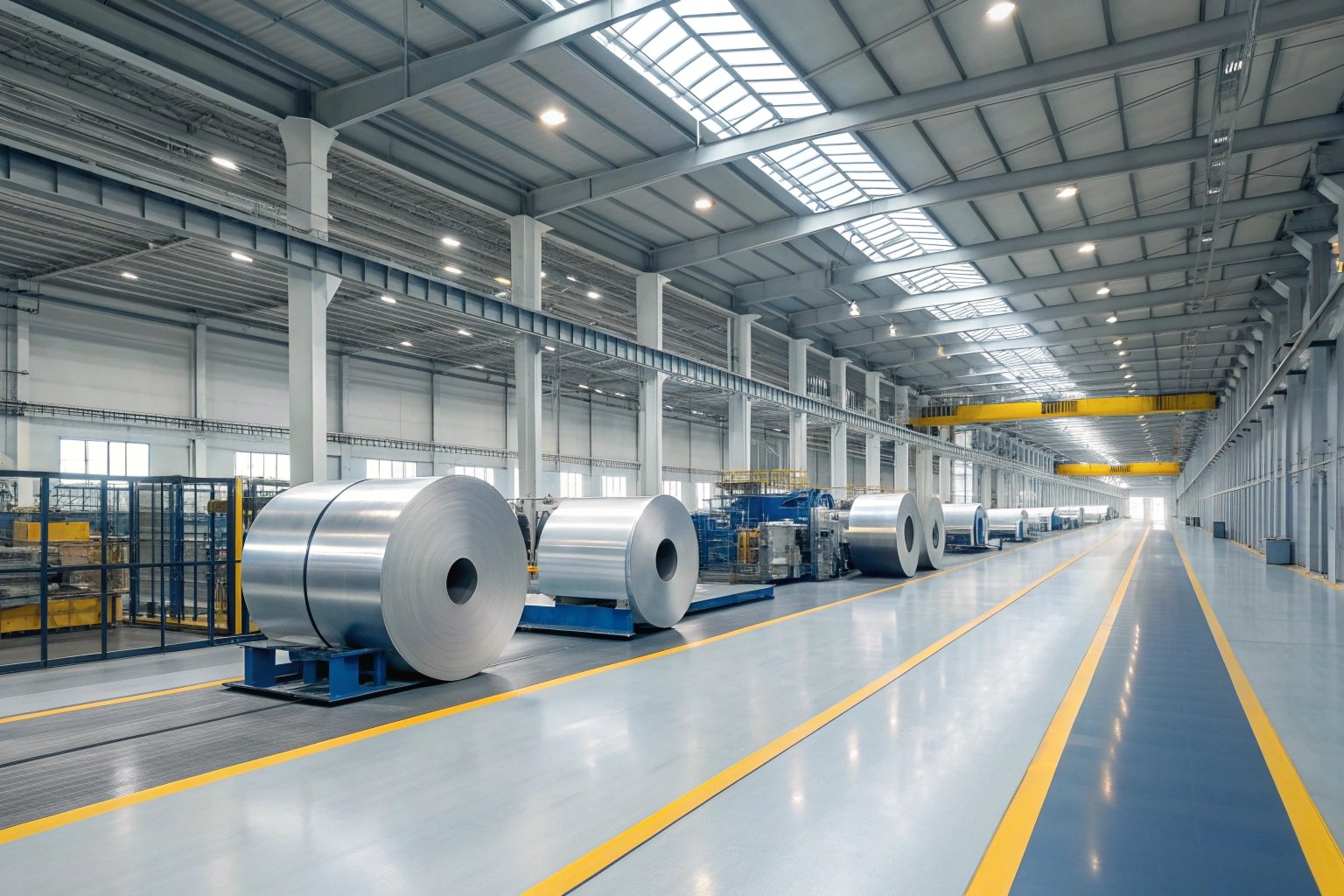
In our Huajiang factory, we test various coatings to see how they handle different meat types. We often recommend specific lacquer weights based on the salt and sulfur content of the customer’s recipe.
| Coating Type | Best Use Case | Visual Appearance |
|---|---|---|
| Gold Lacquer | Low-sulfur veggies/fruits | Golden/Yellow |
| Aluminized Epoxy | Heavy meats (Beef/Mutton) | Metallic Silver |
| Zinc Oxide Lacquer | High-protein seafood | Cream/White |
| Organosol | Deep-drawn cans | Clear or Grey |
Why "Silver" is the Industry Standard for Meat
Most major meat processors prefer the silver look of aluminized coatings because it masks any minor reactions that might occur. Even if a tiny amount of sulfide forms, the silver background hides it much better than a clear or gold background. From a B2B perspective, this reduces the "visual risk" of product returns from retail stores.
Durability During Seaming
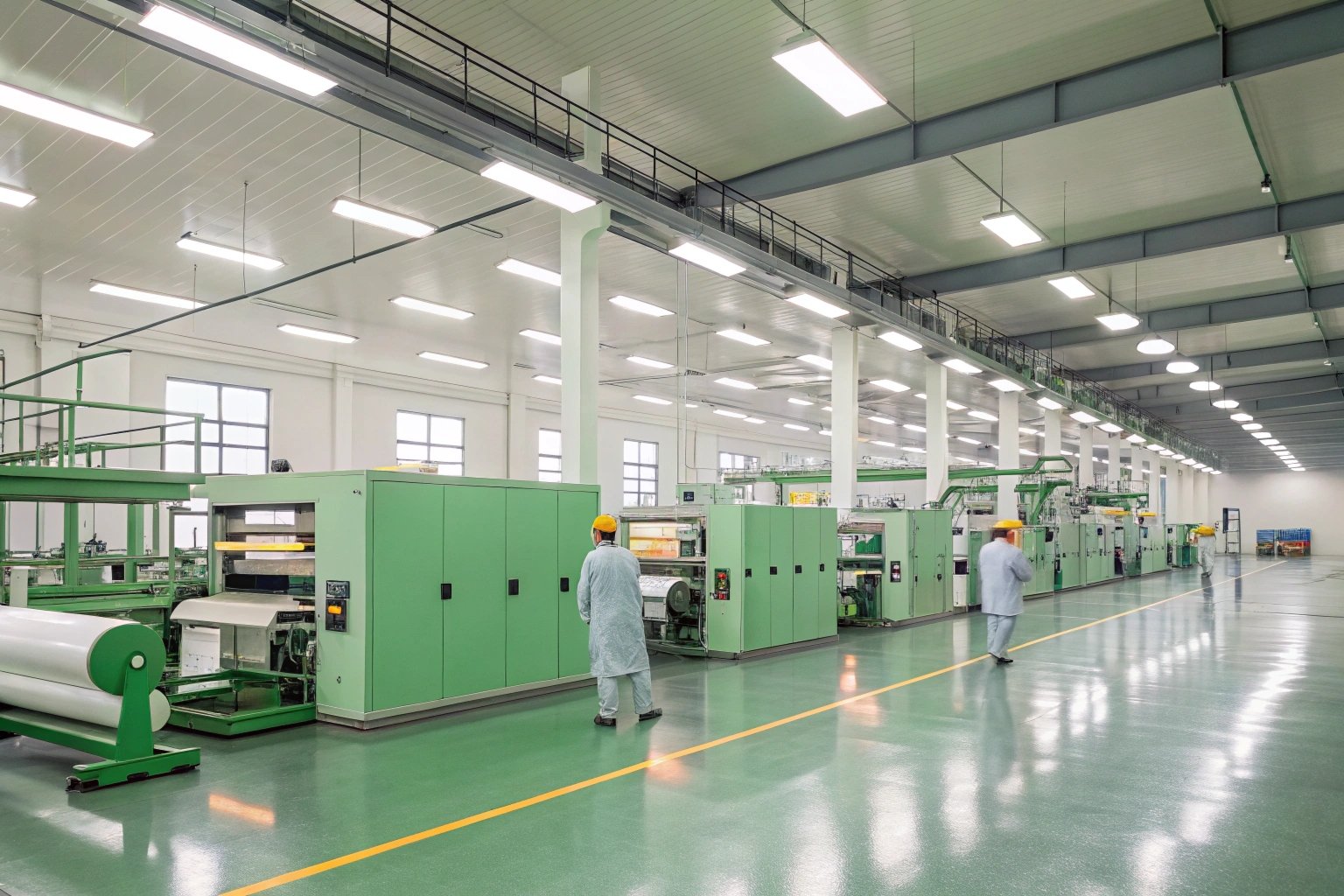
One thing I always tell my clients is to check the flexibility of the coating. Bottom ends undergo a lot of stress during the seaming process. If the aluminized coating is too brittle, it will crack at the rim. Our 53 Fuji coating lines 4 ensure a precise cure, so the lacquer remains flexible enough to bend without losing its anti-sulfur properties.
Can I use standard gold lacquer for high-protein seafood cans?
I once had a client in Thailand try to save money by using standard gold lacquer for tuna cans. Within three months, the internal lids looked like they were covered in soot.
Standard gold lacquer is usually an epoxy-phenolic resin designed for general acidity, not high sulfur. For high-protein seafood, you must use "sulfur-resistant" gold lacquer which contains additives like zinc oxide. These additives trap sulfur ions before they can turn the can surface black.
How Zinc Oxide Saves the Day
The secret to a "gold" look that stays clean is Zinc Oxide 5 ($ZnO$). When hydrogen sulfide gas is released from the seafood, the Zinc Oxide in the lacquer reacts with it:
$$ZnO + H{2}S \rightarrow ZnS + H{2}O$$
The resulting Zinc Sulfide ($ZnS$) is white. Because the lacquer is gold or the $ZnS$ is pale, you cannot see the stain. The "black" problem is solved by turning it into a "white" reaction that is invisible to the eye.
Critical Specifications for Seafood Ends
When I help customers source ends for seafood, I look at three main technical points:
- Coating Weight: For seafood, we usually need 10-15 grams per square meter.
- Curing Degree: The lacquer must be fully cross-linked (over 90%) so it doesn’t soften at 131°C.
- Base Material: We often recommend Tin-Free Steel 6 (TFS) or high-grade Tinplate with a thick alloy layer.
Common Risks of Using the Wrong Lacquer
If you use a standard lacquer for tuna or salmon, you face two big risks. First, the visual staining I mentioned. Second, the sulfur reaction can actually cause the lacquer to peel 7 or "delaminate." Once the lacquer peels, the metal is exposed to the salty brine of the seafood, which leads to rapid corrosion and can pinholes. This is a massive safety risk that no brand can afford.
Technical Support for Custom Recipes
Every seafood recipe is different. Some have more oil; some have more salt. At Huajiang, we provide technical consultations to match the coating recipe to your specific content. We can adjust the ratio of epoxy to phenolic resins to ensure the best balance between sulfur resistance and adhesion.
What specific anti-sulfur tests should I ask the factory to perform?
I always tell my buyers: "Don’t just trust the datasheet; trust the test results." You need to know exactly how those ends will behave in your retort.
You should request a "Sulfide Stain Resistance Test" using a solution of sodium sulfide or actual meat samples processed in a laboratory retort. Additionally, ask for "Copper Sulfate Tests" to check for pores in the tin layer and "Mek Rub Tests" to ensure the anti-sulfur coating is properly cured.

Three Essential Tests for Meat Can Ends
To ensure you aren’t buying a headache, insist on these three procedures during the QC phase 8.
1. The Cysteine/Sulfide Simulation
This is the most direct test. The factory places the tinplate samples in a pressurized vessel with a cysteine solution 9 or sodium sulfide solution. They heat it to 121°C for 90 minutes. If the metal comes out clean, the coating is working. If it comes out spotted, the lacquer is too thin or the chemistry is wrong.
2. Coating Adhesion and Porosity
Even a great coating is useless if it has holes.
- Copper Sulfate Test: We dip the ends in a $CuSO_{4}$ solution. If red spots appear, it means there are "pinholes" where the steel is exposed.
- Adhesion (Cross-Hatch) Test: We scratch a grid into the coating and use tape to try and pull it off. For meat ends, there should be zero peeling.
3. Sterilization Resistance
Meat cans are often processed at very high temperatures. We perform a Retort Test 10 where we submerge the ends in boiling water at high pressure. We check if the coating blushes (turns cloudy) or loses its grip on the metal. A high-quality anti-sulfur end from Huajiang will show no change in appearance or performance after this stress.
Ensuring Batch Consistency
It is not enough for the first 1,000 ends to be good. You need the 1,000,000th end to be exactly the same. We keep a library of "Golden Samples" for every major client. Every hour, our QC team pulls samples from the line to compare against these standards. This is how we maintain the quality consistency that global food brands demand.
Conclusion
Choosing the right anti-sulfur bottom ends is the best way to protect your brand’s reputation. By using specialized coatings like aluminized epoxy or zinc-oxide gold lacquer, you can prevent black stains and ensure your meat products look fresh and appetizing every time a customer opens a can.
Footnotes
1. NIOSH guide on the properties and health hazards of hydrogen sulfide gas. ↩︎
2. FAO report detailing the nutritional composition and sulfur content of seafood products. ↩︎
3. Industry update on the latest developments in food-grade can coating technologies. ↩︎
4. Overview of Fuji Kikai metal printing and coating equipment for industrial packaging. ↩︎
5. Comprehensive scientific overview of zinc oxide properties and its industrial applications. ↩︎
6. Technical data on electrolytic chromium-coated steel (TFS) for food packaging applications. ↩︎
7. Legal and technical considerations for lacquers used in food-contact packaging materials. ↩︎
8. Information on ISO 9001 standards for maintaining quality management in manufacturing. ↩︎
9. PubChem data sheet on L-Cysteine, the amino acid responsible for sulfur release in meat. ↩︎
10. Technical explanation of retort processing and its impact on food packaging durability. ↩︎
Would you like me to send you a technical data sheet for our 307E and 401E anti-sulfur ends?