

I know the sinking feeling of walking into a warehouse and seeing a "swollen" can. For professionals like us in the canning industry 1, a failed bottom end is not just a defect; it is a financial disaster. When I talk to clients, their biggest fear is always the shelf life of acidic products.
The standard tin coating weight for bottom ends used with acidic foods typically starts at 2.8 g/m² (E 2.8/2.8) when combined with a high-quality lacquer. However, for plain ends or highly aggressive contents like tomato paste, a heavier coating of 5.6 g/m² or even 11.2 g/m² is required to prevent rapid corrosion.
Choosing the right specification is a balancing act between cost and safety. If you choose a coating that is too thin, you risk perforation before the product reaches the retail shelf. If you choose one that is too thick, you are throwing away money on expensive tin that you do not need. In this article, I will help you find the exact "sweet spot" for your business.
What tin coating weight is required for high-acid tomato products?
I have seen many buyers make the mistake of treating all tomato products the same. Buying the wrong material for a high-concentration paste during the harvest rush can destroy your profit margins for the entire year.
For high-acid tomato products (pH < 4.0), I strongly recommend a minimum tin coating of 5.6 g/m² (E 5.6/5.6) if you are using a standard lacquer. If you prefer a plain internal finish to maintain color, you must use a heavy coating of at least 11.2 g/m² to handle the acidity.
Understanding the Chemistry of Acid and Tin
When we deal with acidic foods, we are dealing with a chemical battle inside the can. The decision between 2.8, 5.6, or 11.2 g/m² is not just a number; it is a calculation of chemical life expectancy. In my years at Huajiang, I have seen that understanding this chemistry is what separates the top-tier buyers from the ones who constantly face claims.
The "Sacrificial" Role of Tin
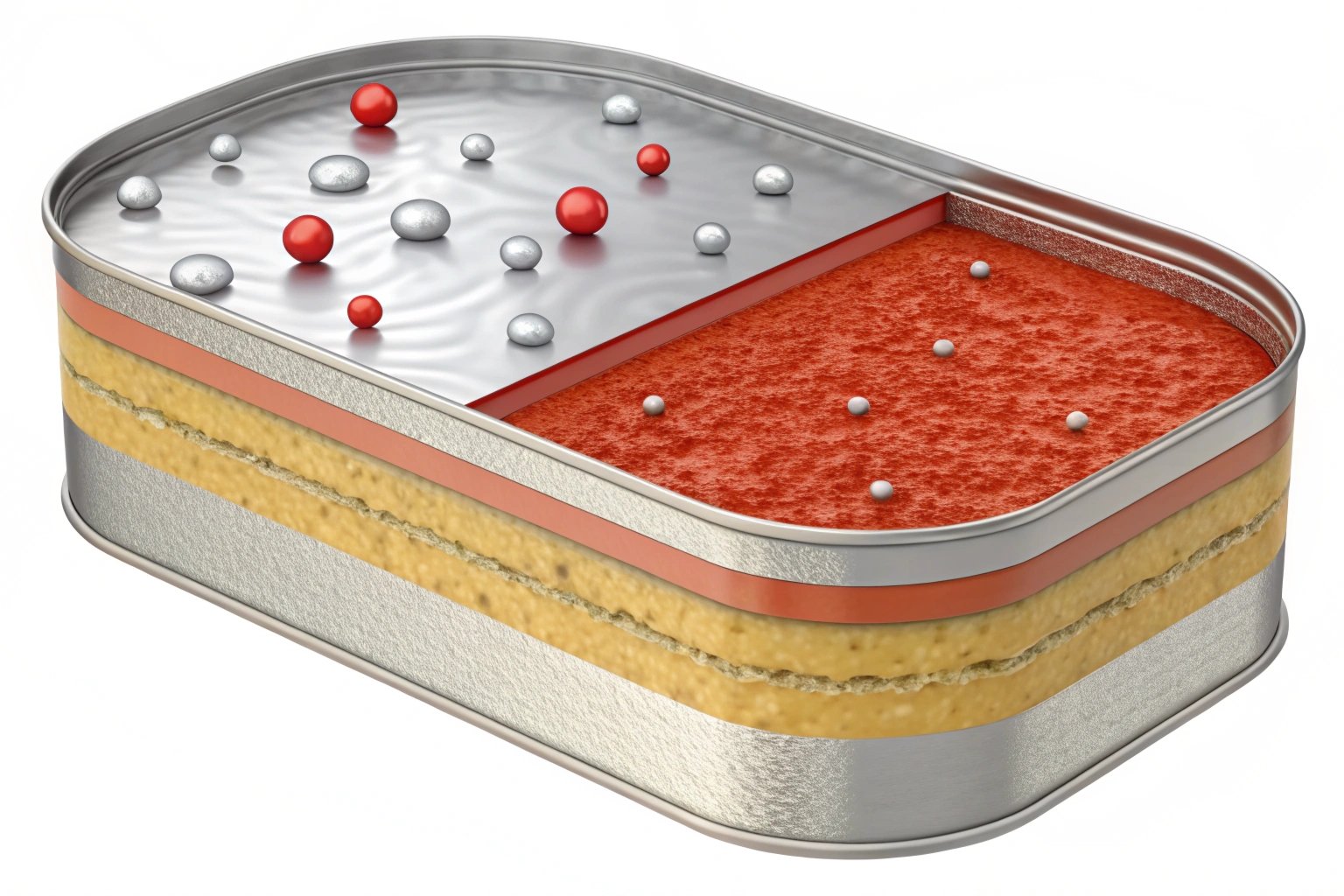
In plain tinplate cans (unlacquered), tin acts as a sacrificial anode 2. This is a crucial concept. The acid attacks the tin instead of the steel base. This reaction releases small amounts of tin ions, which actually helps preserve the bright red color of fruits and tomatoes. If you use a coating that is too thin (like 2.8 g/m²) for a plain can, the tin layer depletes too fast. Once the tin is gone, the acid attacks the steel iron. This creates hydrogen gas, causing the can to swell—the hydrogen swell 3 nightmare we all fear.
The Risk of Lacquered Systems
Most modern buyers, perhaps including you, prefer lacquered bottom ends. You might think, "If I have lacquer, I don’t need heavy tin." This is only partially true. Lacquer is never 100% perfect. There are always microscopic pores. If the tin coating under the lacquer is too thin (below 2.8 g/m²), the acid penetrates these pores and tunnels into the steel. This causes under-film corrosion 4. The lacquer peels off, and the can fails. For aggressive acids like tomato puree or pickled vegetables, a 5.6 g/m² coating provides a thicker safety buffer under the paint.
Specific Recommendations for Tomato Products
Based on my experience supplying millions of bottom ends, here is a breakdown of what works best for different acidity levels.
| Product Type | Acidity (pH) | Recommended Tin Coating (with Lacquer) | Recommended Tin Coating (Plain) |
|---|---|---|---|
| Whole Peeled Tomatoes | 4.3 – 4.5 | 2.8 g/m² | 5.6 g/m² |
| Tomato Paste / Puree | 3.9 – 4.2 | 5.6 g/m² | 8.4 g/m² or 11.2 g/m² |
| Pizza Sauce (Spiced) | < 3.9 | 5.6 g/m² (Special Acid Resistant Lacquer) | Not Recommended |
At Huajiang, we often advise clients to upgrade to 5.6 g/m² for any product with a pH below 4.0. The cost difference is small compared to the risk of a recall. A slightly thicker tin layer acts as insurance. It buys you time if the lacquer layer is scratched during the seaming process or if the storage conditions in the warehouse become too hot, which accelerates chemical reactions.
How do I verify the tin coating thickness on my imported batch?
Trust is good, but verification is better. I always tell my clients that they should not just accept the paper certificate; they need to know how to read the physical steel coil when it arrives at their factory.
To verify tin coating thickness, you must cross-reference the Mill Test Certificate (MTC) with an independent lab test using the Coulometric Method or X-ray Fluorescence (XRF). Never rely solely on visual inspection, as a 2.8 g/m² coating looks almost identical to a 5.6 g/m² coating to the naked eye.

The Trap of "Nominal" vs. "Minimum"
One of the most confusing parts of our industry is the terminology. When you buy "2.8 g/m²" tinplate, you are buying a "nominal" weight. This is the target average. However, the actual spot test on a single piece of a bottom end might read lower.
Reading the Mill Test Certificate (MTC)
When you receive a shipment from China or anywhere else, look at the Mill Test Certificate 5. It should list the tin coating for both the top and bottom surfaces.
- Top Surface (A): Usually the inside of the can.
- Bottom Surface (B): Usually the outside (printed side).
If you order 2.8/2.8, the standard deviation allows for slight variations. However, if you see test results consistently hitting 2.2 or 2.3, you have a problem. This is often where low-quality suppliers cut corners. They aim for the bottom of the tolerance range to save tin. I teach my customers to look for the "Avg. Min" (Average Minimum) values on the report, not just the nominal target.
Testing Methods You Should Know
If you are running a large canning operation, you might want to send samples to SGS or use your own lab. There are two main ways to check this:
- The Coulometric Method (The Referee Method): This is the most accurate. It uses electricity to strip the tin off the steel and measures how long it takes. It is destructive (you lose the sample), but it tells you exactly how much tin was there. You can refer to the standard Coulometric Method 6 for legal disputes.
- X-ray Fluorescence (XRF): This is fast and non-destructive. You can use a handheld gun to scan the sheet. It is great for a quick check in the warehouse using X-ray Fluorescence 7, but it can have a margin of error of about 5-10%.
Huajiang’s Quality Protocol
At our factory in Fujian, we use online automatic detection systems on our electrolytic lines. We also keep retention samples from every coil. If a client like you calls me six months later with an issue, I can pull the original sample and test it again.
| Test Method | Accuracy | Speed | Pros | Cons |
|---|---|---|---|---|
| Coulometric | Very High | Slow (Lab needed) | The industry standard for disputes. | Destroys the sample. |
| XRF (X-ray) | Medium/High | Fast (Seconds) | Portable, good for incoming QC. | Expensive equipment. |
| Microscopic | Low | Slow | Can see layer structure. | Hard to measure exact weight. |
Always ask your supplier for the "Average Minimum" guarantee. A reliable partner will not hide this data. They should be willing to show you the real-time data from the production line if you visit the factory.
Is a 2.8/2.8 coating sufficient for long-term shelf life?
I often get asked this by purchasing directors who are under pressure to cut costs. They want to know if the standard, cheapest option will hold up for a two-year expiration date on a can of pineapples or sardines.
A 2.8/2.8 tin coating is generally sufficient for shelf lives of 12 to 18 months for low-acid foods, provided the internal lacquer is flawless. However, for acidic foods intended for storage beyond 24 months, relying on this low coating weight significantly increases the risk of pitting and perforation.

The Hidden Dangers of Long-Term Storage
When we talk about shelf life, we are talking about probability. With a 2.8 g/m² coating, you are operating with a very thin margin of error. It is like walking on thin ice; you might make it across, but if you stop (store it too long), you will fall through.
The "Pitting" Phenomenon
In acidic environments, corrosion does not happen evenly. It happens in spots. This is called pitting 8. A tiny defect in the tin layer becomes a focused point of attack.
With a 2.8 g/m² coating, the distance between the food and the steel base is very short. It does not take much time for the acid to drill through.
With a 5.6 g/m² or 8.4 g/m² coating, you have a thicker barrier. The pit has to travel twice as far to reach the steel. This effectively doubles your safety margin. This is vital for goods shipped to regions with hot climates, like the Middle East or South America, where heat accelerates corrosion inside the can.
The Stress of the "Expansion Ring"
Look at a bottom end. It has concentric rings (beads) stamped into it. These rings allow the metal to expand during the retort process 9 (sterilization).
When we stamp these rings, the metal stretches. As the steel stretches, the tin coating gets thinner in those specific areas.
If you start with 2.8 g/m², the tin at the top of the expansion ring might stretch down to 1.5 g/m² or less. This is almost bare steel! This is usually where the rust starts. Using a thicker starting gauge helps ensure that even the stretched areas remain protected.
Shelf Life Guidelines
Based on industry data and our own internal testing at Huajiang, here is a general guide for acidic foods (pH < 4.5):
- 1 Year Target: 2.8 g/m² + Good Epoxy Phenolic Lacquer.
- 2 Year Target: 5.6 g/m² + Good Epoxy Phenolic Lacquer.
- 3+ Year Target (Strategic Reserve): 11.2 g/m² (Plain) or 8.4 g/m² + Dual Lacquer Coat.
Don’t let the price of tin dictate your product’s reputation. If you are shipping to markets with slow turnover, upgrade the coating. It is cheaper to pay for extra tin now than to pay for a recall later.
Table: Shelf Life Estimation Based on Coating
| Coating Weight | Acidic Food Suitability | Estimated Safe Shelf Life | Risk Level |
|---|---|---|---|
| 1.1 / 1.1 | None | < 6 Months | High (Do not use) |
| 2.8 / 2.8 | Low Acid / Mild | 12 – 18 Months | Moderate |
| 5.6 / 5.6 | Medium / High Acid | 24 – 30 Months | Low |
| 8.4 / 8.4 | Aggressive Acid | 36+ Months | Very Low |
Can differential tin coating save me money without risking quality?
This is my favorite strategy to share with clients because it is a "win-win." You get the high protection you need for the food, but you pay less for the outside of the can.
Yes, differential tin coating is a highly effective cost-saving strategy. By using a heavy coating (like 5.6 g/m² or 8.4 g/m²) on the internal food-contact side and a light coating (2.8 g/m²) on the external side, you can reduce total material costs by 3% to 5% without compromising food safety.
How Differential Coating Works
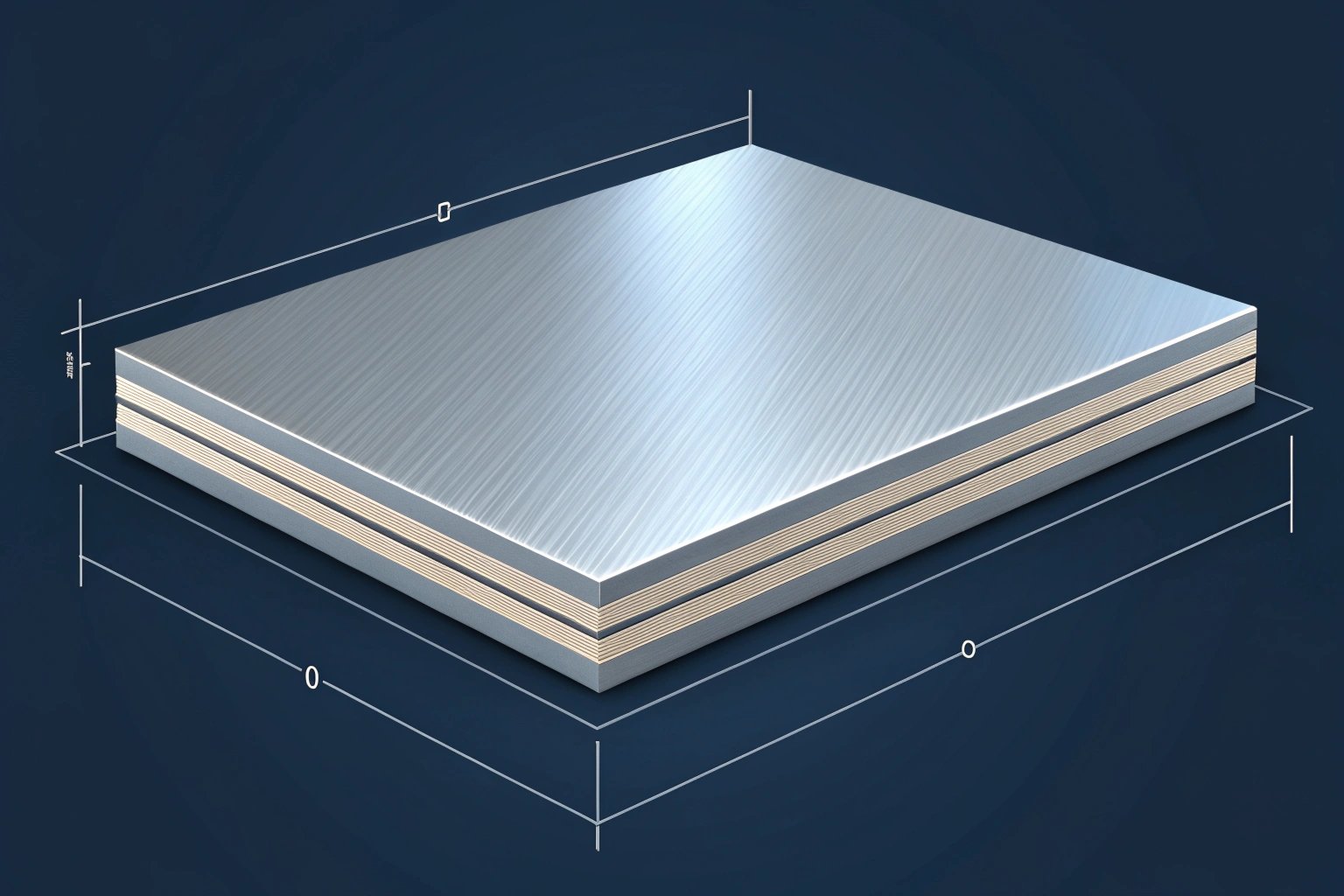
Tin is expensive. It trades on the global metal exchange, and prices fluctuate wildly. Why put a thick layer of expensive tin on the outside of a bottom end? The outside only needs to resist atmospheric humidity and look shiny. It does not face acid.
The "D" Specification
In the industry, we call this differential coating 10. You will see specifications like:
- D 5.6 / 2.8: 5.6g on the inside, 2.8g on the outside.
- D 8.4 / 2.8: 8.4g on the inside, 2.8g on the outside.
- D 11.2 / 5.6: For very premium high-acid plain cans.
By stripping the unnecessary tin from the outside, you save money on every single bottom end. Over a purchase of 10 million ends, this adds up to thousands of dollars. It allows you to allocate your budget where it matters: the inside of the can.
How to Identify the Sides (Line Markings)
The biggest risk with differential tinplate is mixing up the sides. If you stamp the bottom end with the light coating facing the tomato paste, the can will explode in months.
To prevent this, mills apply "Line Markings" on one side of the sheet.
- Usually, the heavy coating side is plain.
- The light coating side has parallel lines running across it.
- Crucial Step: When we print or lacquer the sheets at Huajiang, we have strict sensors to ensure the food-contact side is the heavy side.
Is It Worth It?
For large volume buyers, absolutely. If you are buying small quantities, the mill might not want to run a custom differential batch for you. But since Huajiang keeps 100,000 tons of stock, we often have these differential specifications ready to go.
It allows you to tell your boss: "I kept the quality identical to last year, but I cut the raw material cost." That is a powerful position to be in. The only downside is inventory management; you must ensure your warehouse team knows how to read the line markings.
Table: Typical Differential Combinations
| Spec Code | Inside Weight | Outside Weight | Best Application |
|---|---|---|---|
| D 5.6/2.8 | 5.6 g/m² | 2.8 g/m² | Standard Tomato Paste, Fruits. |
| D 8.4/2.8 | 8.4 g/m² | 2.8 g/m² | Aggressive Pickles, Long Shelf Life. |
| D 11.2/5.6 | 11.2 g/m² | 5.6 g/m² | Premium Unlacquered Light Fruits. |
Conclusion
Selecting the right tin coating weight is not just about following a standard; it is about matching the steel to your specific product and shelf-life goals. While 2.8 g/m² is a common standard, acidic foods often demand the extra security of 5.6 g/m² or differential coatings. At Huajiang, we combine massive inventory with technical expertise to ensure you never have to worry about the integrity of your cans.
Footnotes
1. Overview of the global metal packaging and canning sector. ↩︎
2. How tin protects steel through electrochemical sacrifice. ↩︎
3. Causes of gas buildup leading to can deformation. ↩︎
4. Corrosion mechanism occurring beneath protective lacquer layers. ↩︎
5. Document certifying chemical and physical properties of steel. ↩︎
6. Standard electrochemical test for measuring tin thickness. ↩︎
7. Non-destructive analytical technique for elemental analysis. ↩︎
8. Localized corrosion that creates small holes in metal. ↩︎
9. Thermal sterilization method used in food preservation. ↩︎
10. Explanation of differential coating specifications for tinplate. ↩︎