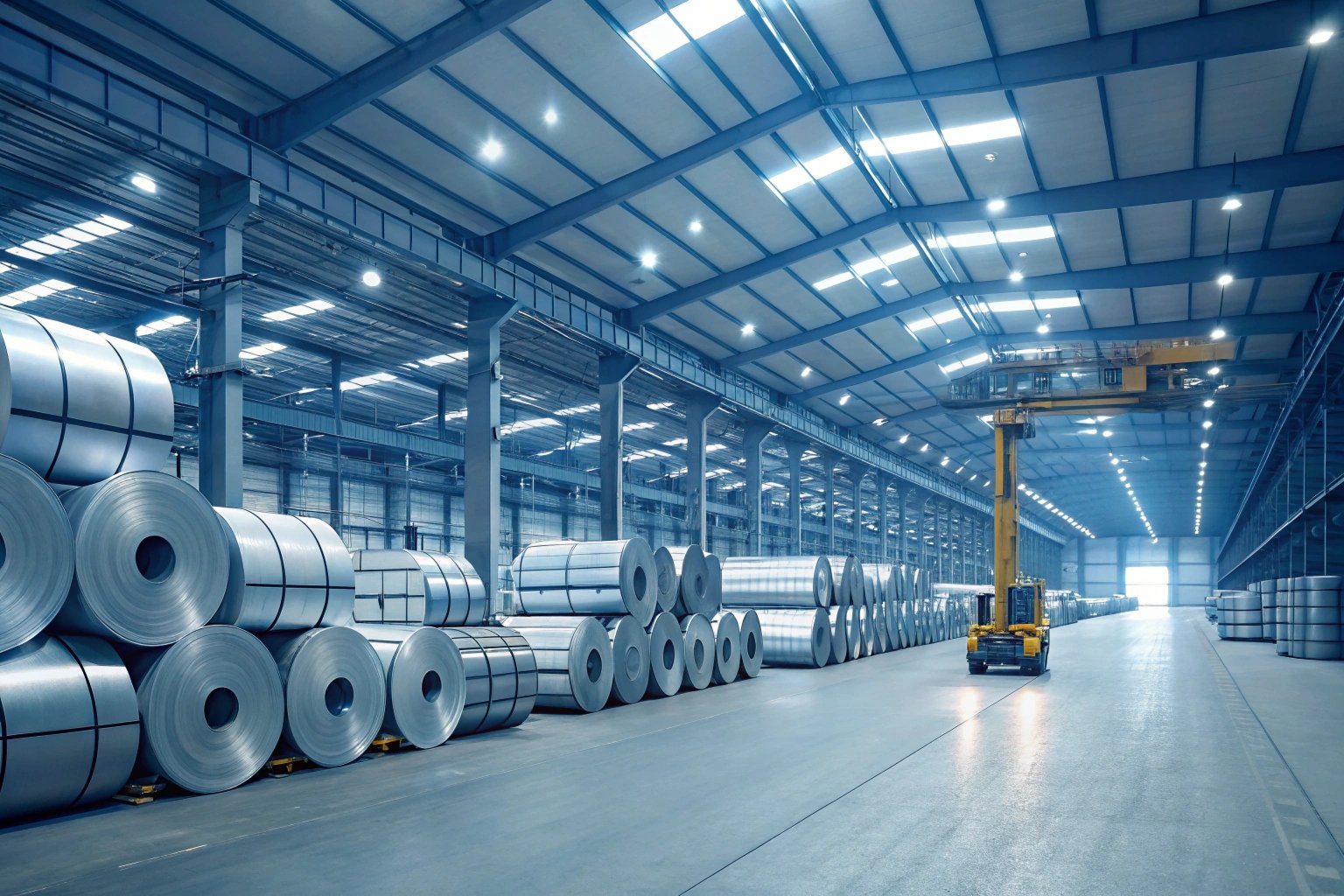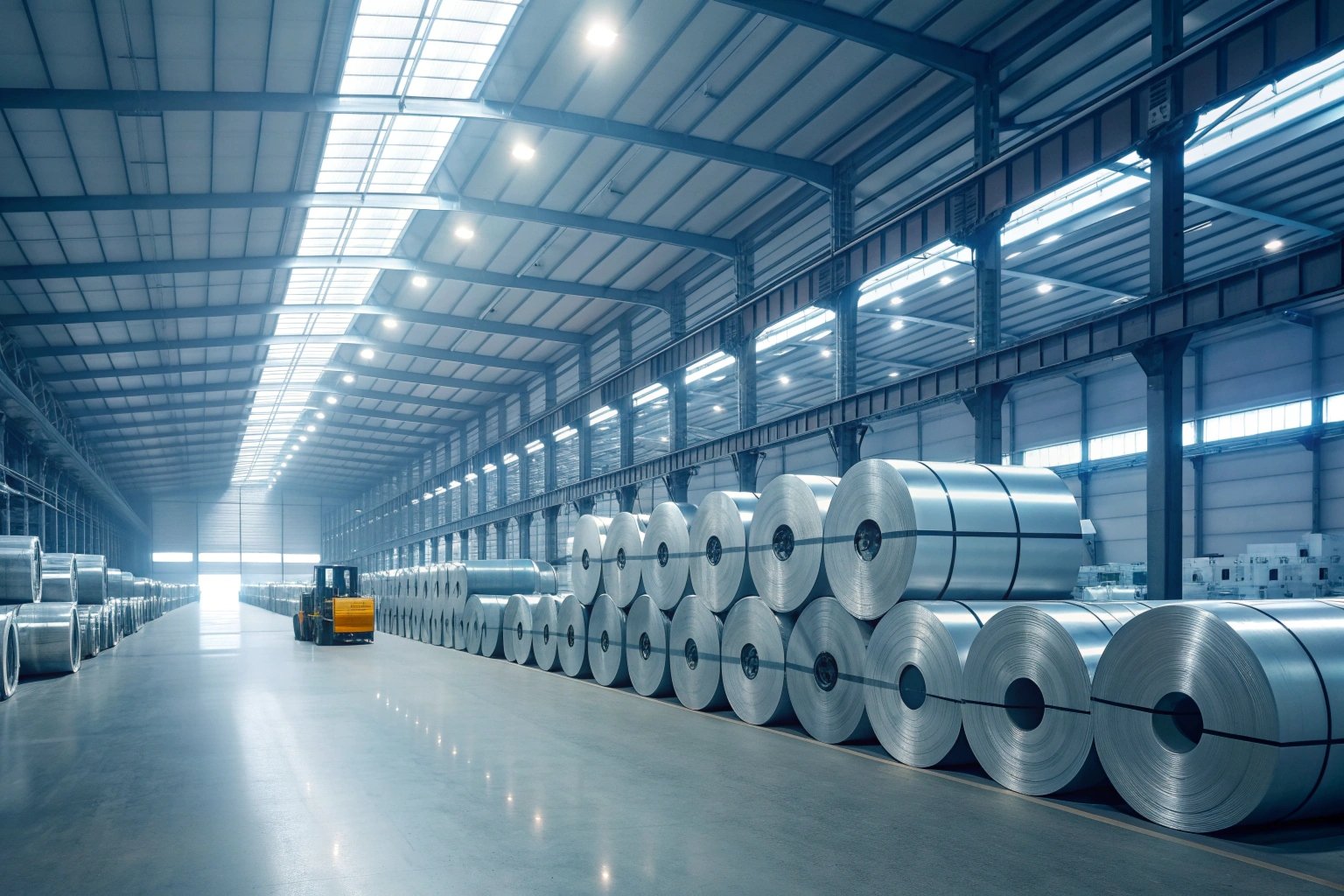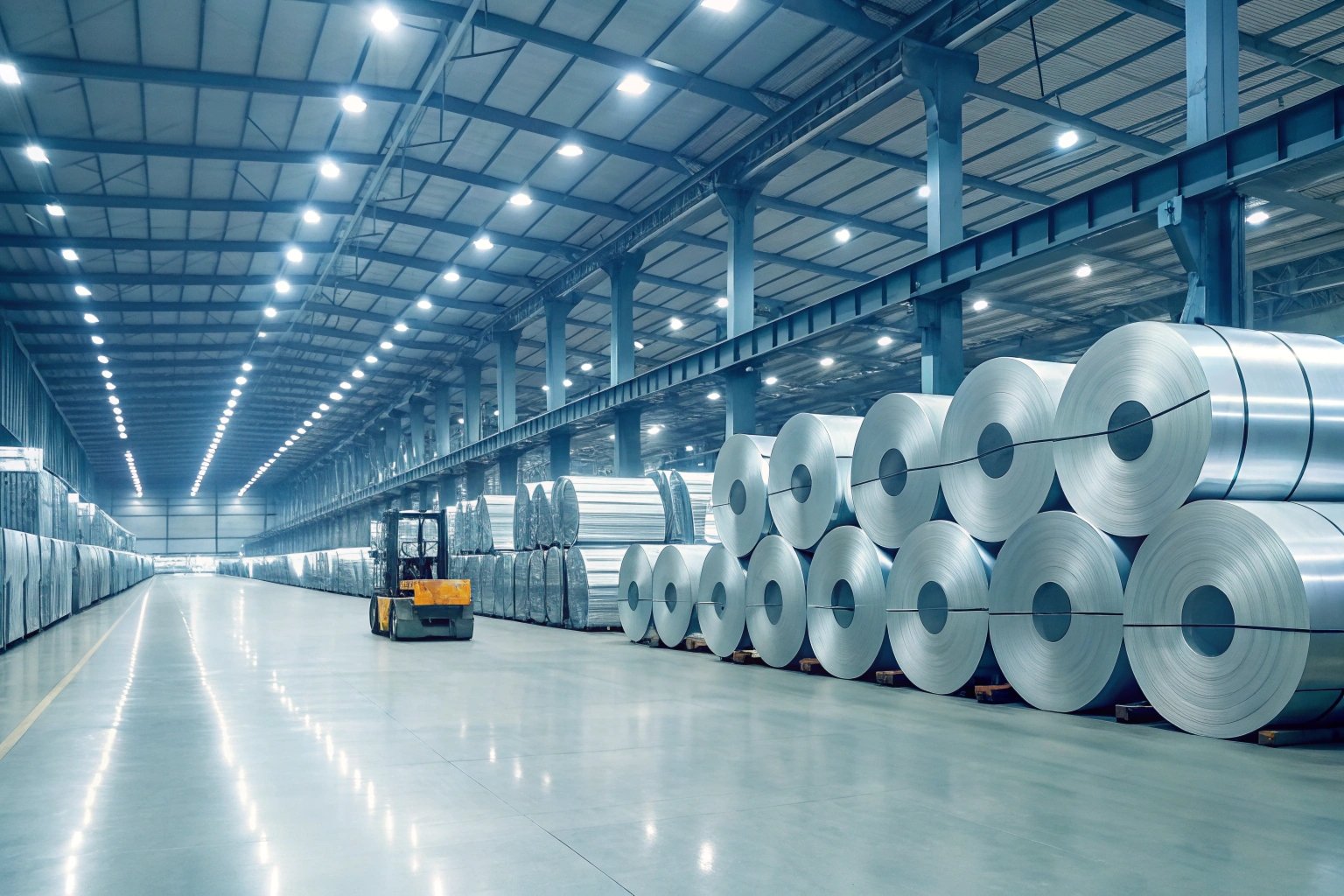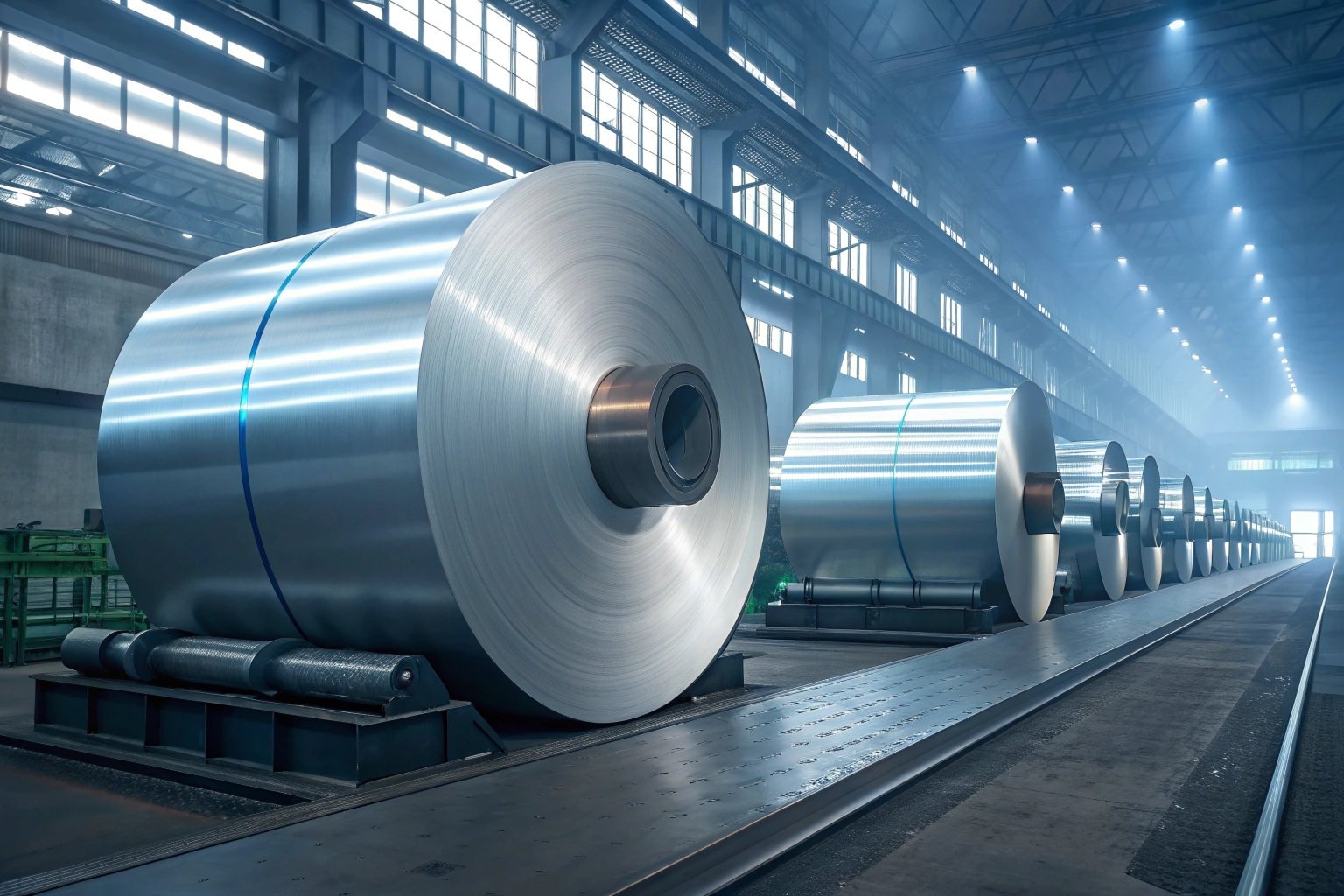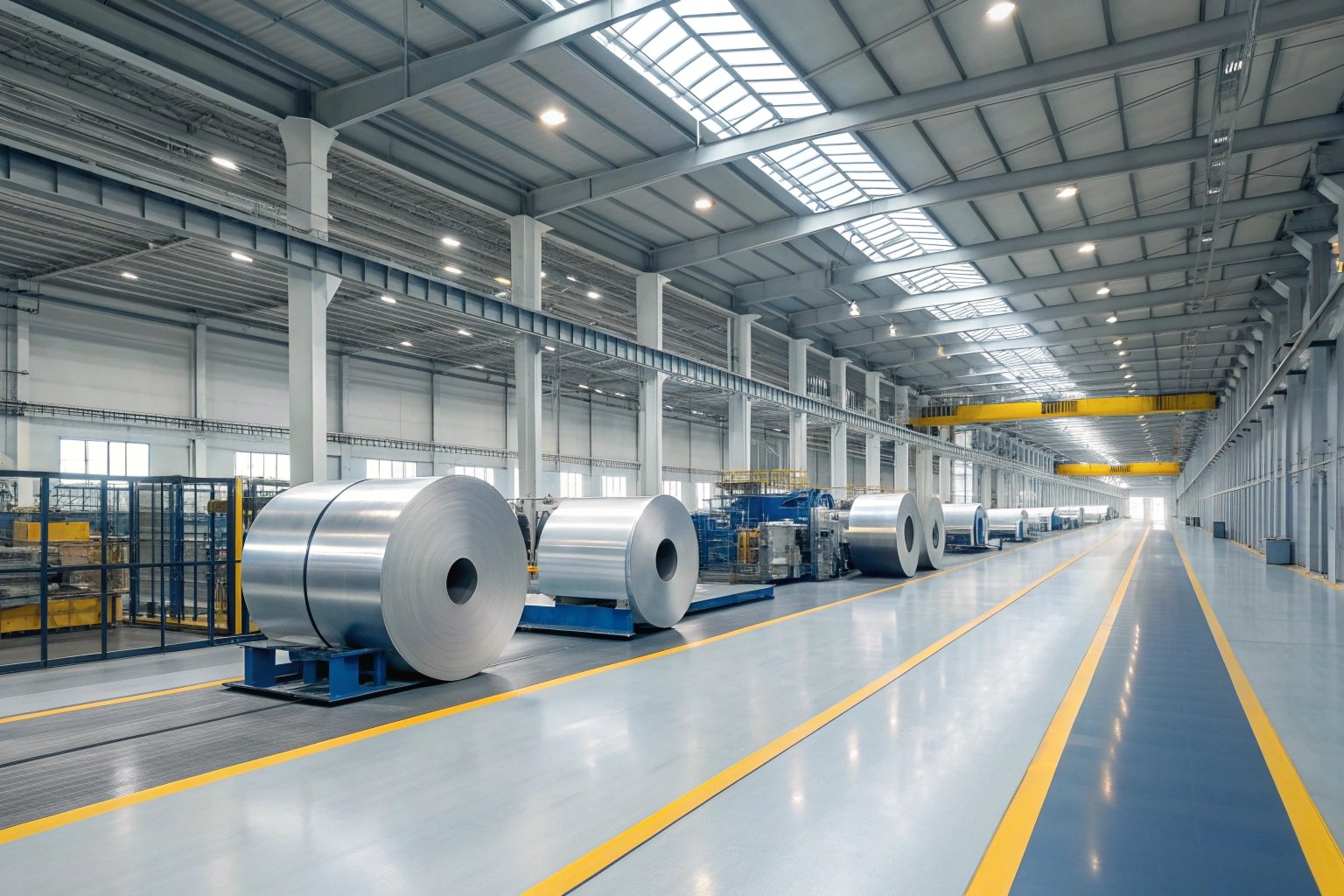

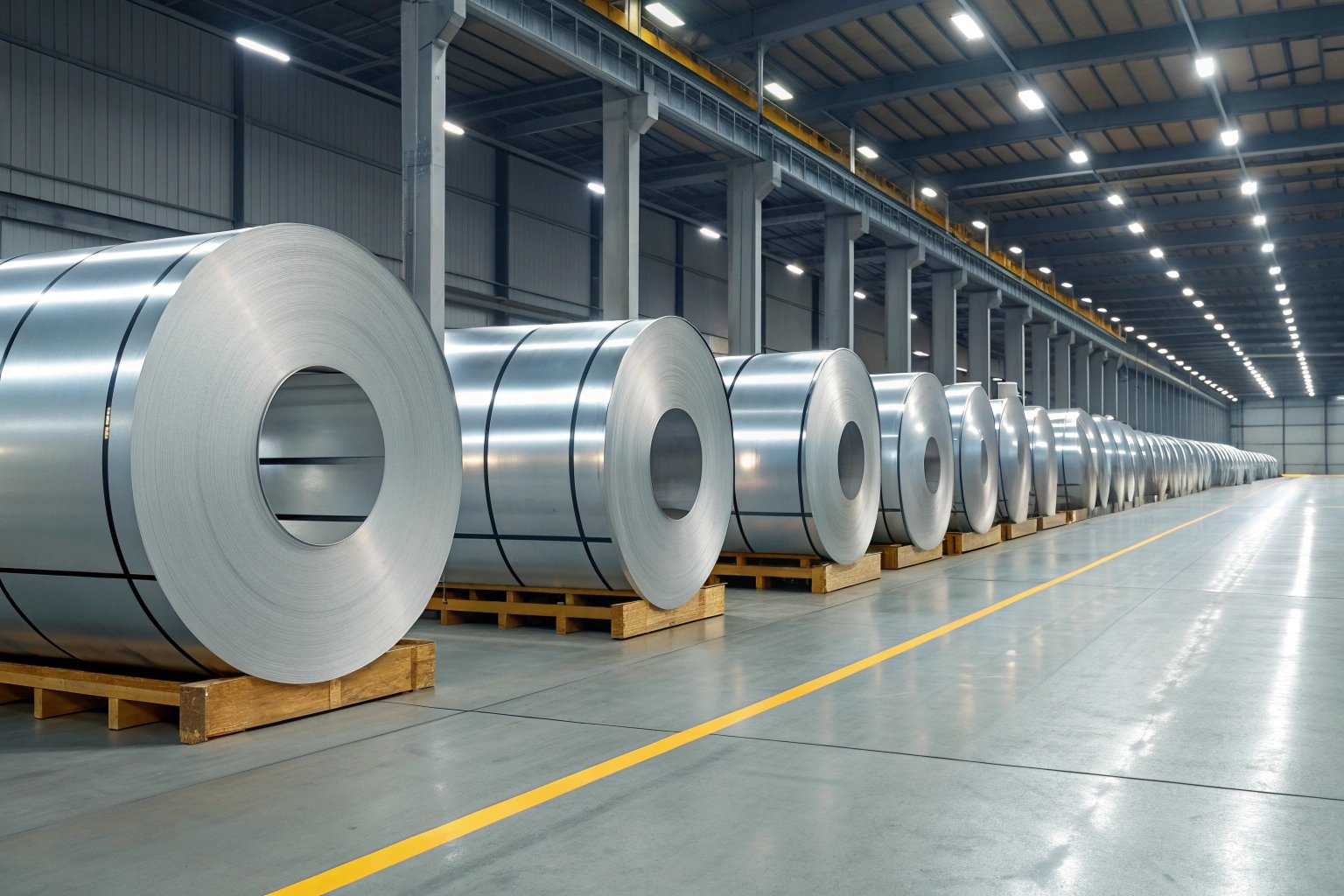
Ordering raw materials with the wrong dimensions stops production immediately. I have seen lines shut down simply because a coil did not fit the decoiler. It is a costly mistake.
The standard Inner Diameter (ID) for Electrolytic Tin Plate is usually 508 mm or 610 mm. The Outer Diameter (OD) typically ranges from 1,000 mm to 1,300 mm. These sizes allow the coils to fit most standard machinery and shipping containers safely.
Dimensions are just as important as the grade of the steel. If the size is wrong, the best quality material becomes useless. Let me explain the specific details you need to check before you place your next order.
Can you adjust the coil Inner Diameter (ID) to fit my decoiler?
A mismatched Inner Diameter (ID) is a major headache for any production manager. If the coil opening is too small or too large for your mandrel 1, you cannot run the machine.
Yes, we can adjust the ID to match your equipment, but we follow strict industry standards. The most common sizes are 508 mm (20 inches) and 610 mm (24 inches). We can also provide a smaller 420 mm (16.5 inches) ID for specific older production lines.
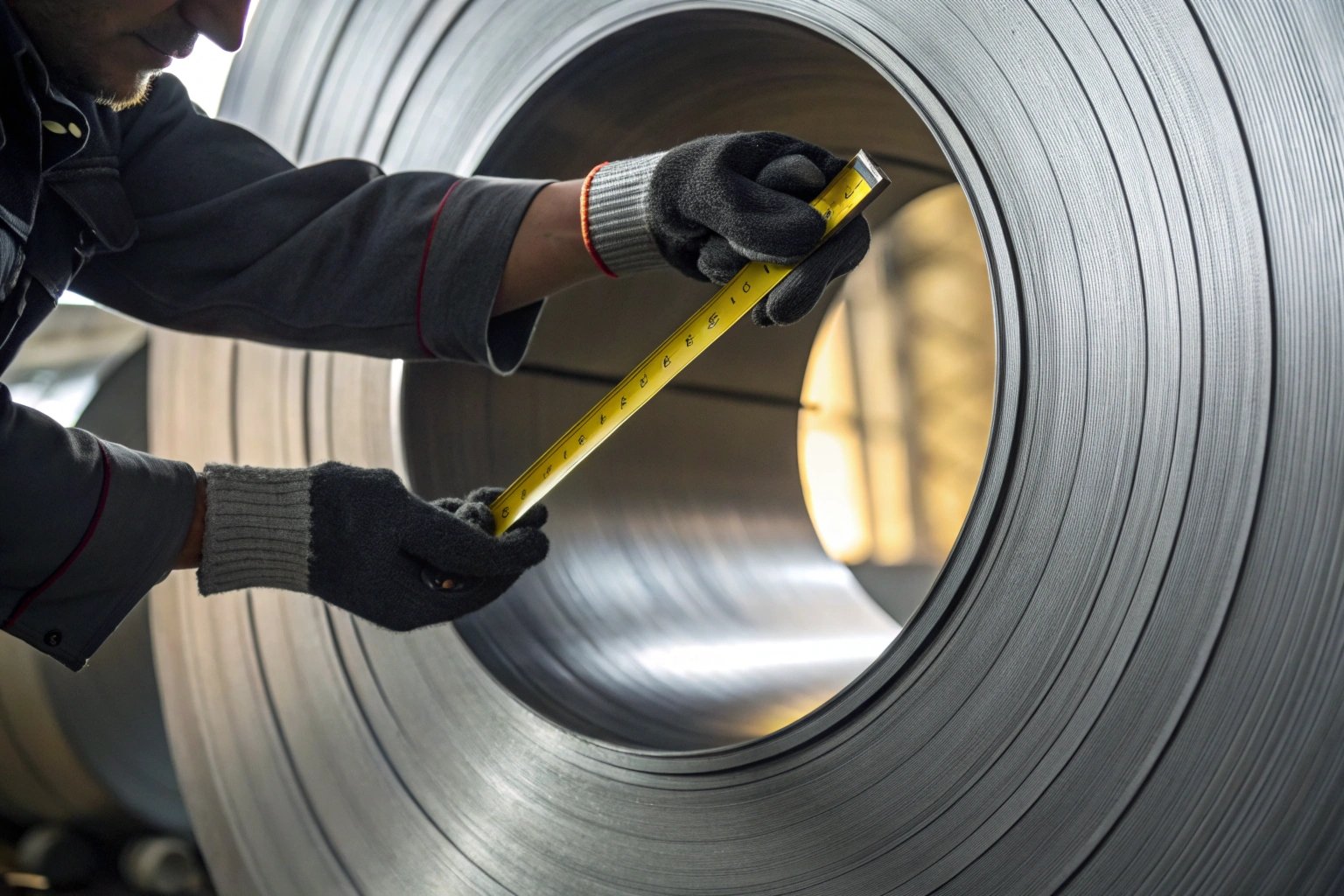
When we talk about the Inner Diameter, we are talking about the "eye" of the coil. This dimension is critical because it dictates how the coil sits on your uncoiler 2 (decoiler). If you get this wrong, you have to buy expensive adapter segments or rewind the coil, which damages the material.
Why Standard Sizes Matter
The industry has settled on a few standard sizes for a good reason. The 508 mm (20 inches) ID is the "Gold Standard" for Electrolytic Tin Plate 3 (ETP). It offers the best balance. It is small enough to keep the coil stable but large enough to handle the weight of a standard coil.
However, we are seeing a shift toward the larger 610 mm (24 inches) ID. This is not just a random preference. As tin plate gets thinner (down to 0.15mm), the steel near the center of the coil curls very tightly. This is called coil set 4. A larger ID reduces this curve. It makes the steel flatter right out of the gate, which helps your feeding equipment run faster.
Handling Non-Standard Requests
Sometimes, I get requests for a 420 mm (16.5 inches) ID. This is usually for older machinery or smaller slitters 5. While we can produce this, it is becoming less common. You need to verify your mandrel expansion range. Most modern decoilers can expand to grip a 508 mm coil but cannot shrink down to 420 mm.
Here is a quick reference guide on how to choose the right ID for your needs:
| ID Size (mm) | ID Size (inches) | Best Application | Common Issues |
|---|---|---|---|
| 420 mm | 16.5" | Small/Older Slitting Lines | Hard to find mandrels; tighter coil set. |
| 508 mm | 20" | Standard Canning & Stamping | The global standard; fits 90% of machines. |
| 610 mm | 24" | High-Speed / Thin Gauge | Reduces waste at the core; requires large decoiler. |
Always check your machine manual. Do not guess. If your mandrel collapses to 480mm and expands to 530mm, a 508mm coil is perfect. A 420mm coil will not fit on the arm, and a 610mm coil will hang loose and slip.
What is the maximum Outer Diameter (OD) you can load in a container?
Shipping costs are high, so you naturally want to maximize the weight in every container. However, if the coil is too wide, it physically will not fit through the container door.
The maximum safe Outer Diameter (OD) for loading into a standard container is usually 1,300 mm. While we can make larger coils, sticking to a range of 1,050 mm to 1,250 mm ensures the coils fit easily without damaging the container walls or your unloading equipment.
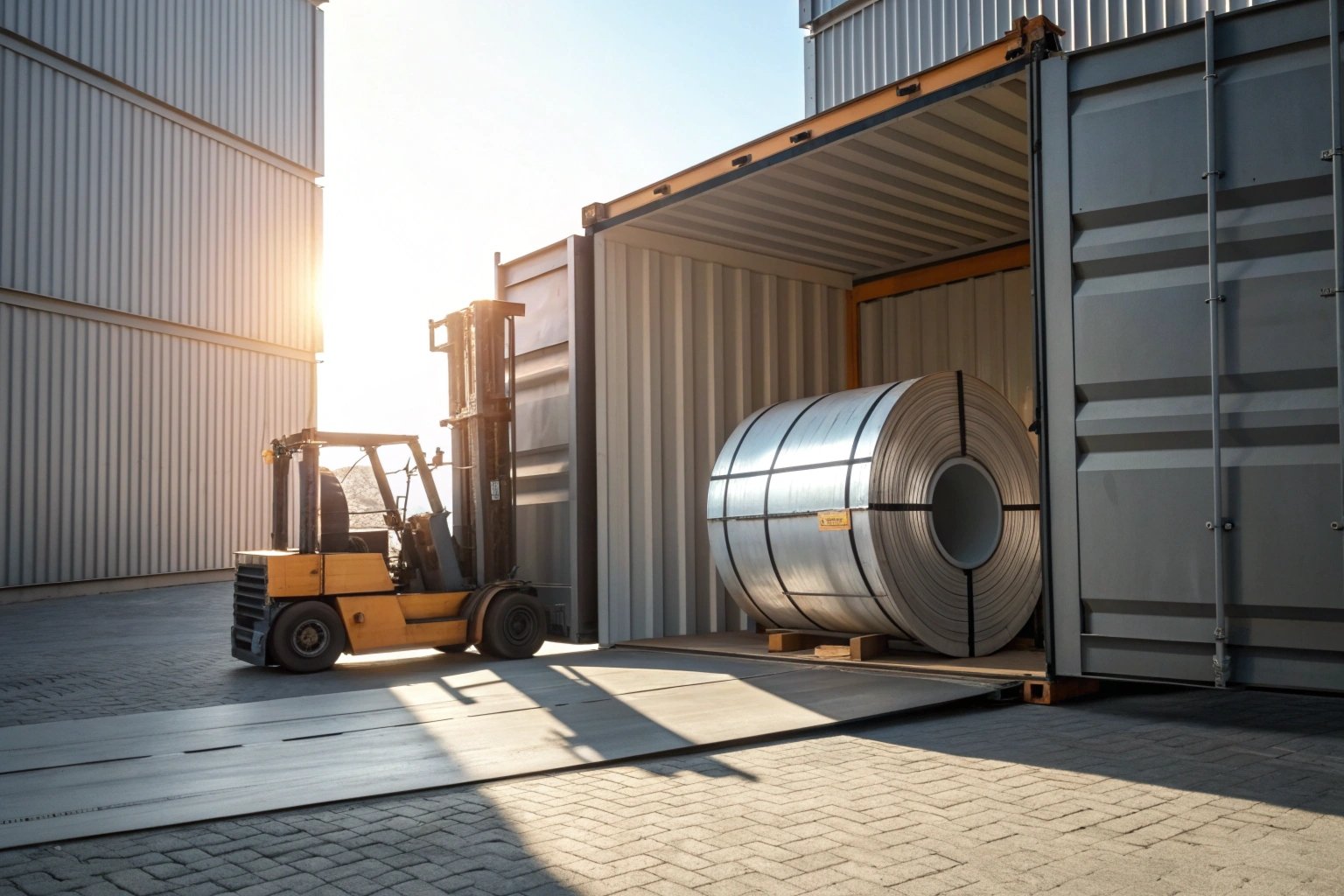
The Outer Diameter is not a fixed number like the Inner Diameter. It grows as we add more steel to the coil. It is a variable that depends on the total weight of the coil and the thickness of the material. However, logistics place a hard limit on how big we can go.
The "Eye-to-Sky" Constraint
Tin plate coils are almost always shipped "Eye-to-Sky" (vertical axis) on wooden pallets 6. This is different from heavy hot-rolled steel, which is often shipped "Eye-to-Wall" (horizontal axis). We ship tin plate vertically to protect the delicate edges. If the coil is on its side, the weight can crush the thin edges, causing defects.
Because they are on pallets, the footprint matters. A standard shipping container is roughly 2.3 meters wide. We need to fit two rows of pallets side-by-side. If the OD is larger than 1,150 mm, we cannot fit two rows easily. We have to stagger them, which reduces the total weight we can load. This increases your shipping cost per ton.
Weight vs. Diameter
Most buyers ask for a coil weight between 3 to 10 metric tons. This naturally keeps the OD within the safe zone of 1,000 mm to 1,300 mm. If you ask for a "Max OD," you also need to consider your forklift capacity. A coil with a 1,400 mm OD might weigh 12 tons or more. Does your warehouse have a forklift that can lift that?
Here is a breakdown of how the OD affects your logistics:
| OD Range (mm) | Loading Style | Risk Level |
|---|---|---|
| 900 – 1050 | Easy to fit 2 rows; very stable. | Low. Easy to handle. |
| 1050 – 1250 | Standard fit; maximizes container payload. | Low. Ideal for most buyers. |
| 1300+ | Tight fit; may require special lashing. | High. Hard to unload without a ramp. |
We recommend aiming for an OD of 1,100 mm to 1,200 mm. This hits the "sweet spot." It maximizes the weight in the container (lowering your freight cost) but keeps the coils small enough for standard 5-ton or 7-ton forklifts to handle safely.
Do you mark the ID/OD clearly on the coil tag?
Imagine receiving 50 coils that all look identical. Without clear data, you have to manually measure and weigh each one. This wastes time and leads to production errors.
We clearly mark the ID, OD, and net weight on every coil tag. We also include the heat number and temper grade. This information is printed in plain text and barcoded, allowing your warehouse team to scan and identify the stock immediately upon arrival.
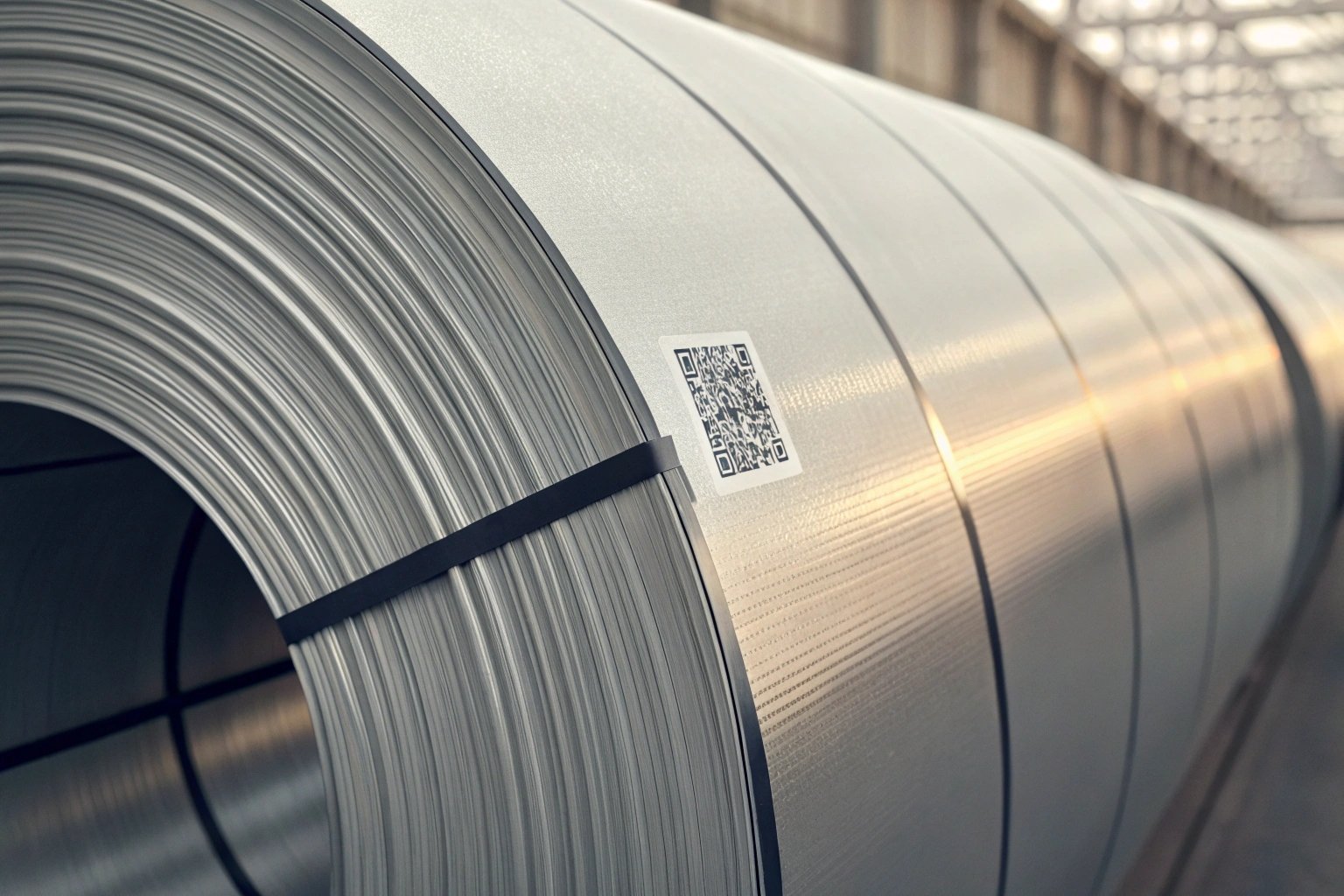
Traceability is not just a paperwork requirement; it is a safety net for your business. When a coil arrives at your factory, the tag is the only link between the physical steel and the quality certificate (MTC 7). If that tag is unclear or missing the dimensions, your team is flying blind.
What Must Be on the Tag
We treat the coil tag as a passport for the product. It must be durable and legible. We list the dimensions in a specific format: Thickness x Width x Length (or Coil Weight). But we go further. We explicitly state the ID and OD.
Why is this critical? Because visual estimation fails. A 508mm ID looks very similar to a 520mm ID to the naked eye. If a worker grabs the wrong coil and tries to force it onto a machine, they can damage the decoiler wedges. By printing "ID: 508mm" clearly, we stop that mistake before it happens.
Digital Integration
We know that many of our clients, like David, use ERP systems 8 to track inventory. That is why we do not just write the numbers with a marker. We use printed, weather-resistant labels.
- Barcodes/QR Codes: Your receiving team can scan the coil into your system in seconds.
- Heat Number Association: The tag links the dimensions to the specific chemical batch of the steel.
- Production Date: Helps you manage First-In, First-Out 9 (FIFO) inventory to prevent rust or aging.
Preventing Material Mix-ups
In a busy warehouse, you might have coils with different specs sitting next to each other. One might be a T-3 temper with a 610mm ID, and the next is a T-4 temper with a 508mm ID. They look exactly the same from the outside.
If the ID is not on the tag, your forklift driver has to get off the truck and measure it with a tape measure. This is slow and dangerous. Our tags ensure that the driver can see the specs from the seat of the forklift. It streamlines your intake process and ensures the right coil goes to the right machine every single time.
Can I request smaller coils (baby coils) for easier handling?
Not every factory is equipped with heavy-duty overhead cranes. Sometimes you need smaller coils that your smaller forklifts can handle safely, even if it means more changeovers.
Yes, you can request "baby coils," which typically weigh between 1 to 3 tons. These coils have a smaller Outer Diameter (OD), making them much easier to move. However, please note that they often require more frequent machine stops and may carry a small surcharge.
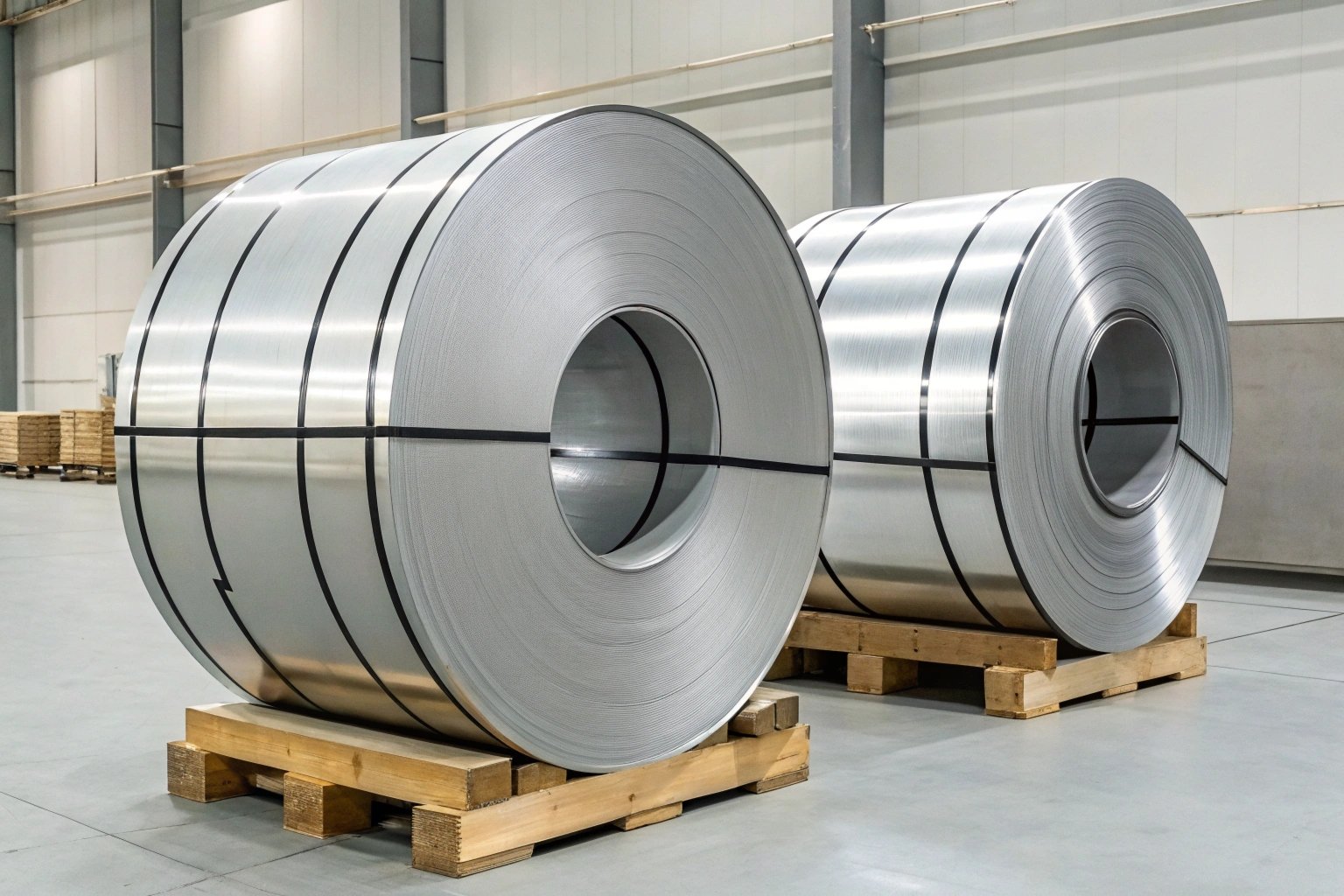
We call them "Baby Coils," but they play a big role for many manufacturers. A standard coil might weigh 8 or 10 tons. If your forklift is only rated for 3 tons, you literally cannot move the standard product. In this case, we cut the coil shorter during production to reduce the weight and the OD.
The Trade-Off: Convenience vs. Efficiency
While baby coils solve the handling problem, they introduce new challenges. The main issue is efficiency.
Think about it this way: Every time you finish a coil, you have to stop the machine, take off the old core, load the new coil, and thread the steel. This takes time.
- Standard Coil (8 tons): You run for 4 hours without stopping.
- Baby Coil (2 tons): You stop every hour to change the coil.
This extra downtime hurts your total daily output. However, if your equipment cannot lift heavy weights, this is the only option. We help you find the balance.
Production and Cost Implications
Producing baby coils is also more work for us. We have to slow down our slitting lines to cut the coils more frequently. We also use more packaging materials (more pallets, more strapping, more paper) for the same amount of steel.
Because of this, baby coils often come with a slightly higher price per ton.
| Feature | Standard Coil | Baby Coil |
|---|---|---|
| Typical Weight | 5 – 12 Tons | 1 – 3 Tons |
| Typical OD | 1100 – 1300 mm | 750 – 1000 mm |
| Handling | Heavy Crane / Large Forklift | Small Forklift |
| Efficiency | High (Few stops) | Lower (Frequent stops) |
When to Choose Baby Coils
I usually recommend baby coils for three specific situations:
- Safety Limits: Your floor has a weight limit or your cranes are small.
- Short Runs: You are doing a small custom job and do not want to open a massive 10-ton coil for a 1-ton order.
- Space Constraints: You do not have the vertical space to store large diameter coils.
If you have the capacity, buy the standard sizes. It is cheaper and faster. But if you need the flexibility, we are fully equipped to supply the smaller sizes you need, often using specialized overhead cranes 10 for loading.
Conclusion
Getting the ID and OD right prevents costly downtime and ensures your safety. Whether you need standard sizes or custom baby coils, we can adjust to fit your line.
Footnotes
1. Definition of the shaft that supports the coil. ↩︎
2. Machinery used to unwind coils for processing. ↩︎
3. Overview of tin plate manufacturing and properties. ↩︎
4. Explanation of coil curvature defects in metal processing. ↩︎
5. Machines that cut large coils into narrower strips. ↩︎
6. Standard bases used for safe transport and storage. ↩︎
7. Documents certifying a material’s chemical and physical properties. ↩︎
8. Software for managing business processes and inventory. ↩︎
9. Inventory management method using oldest stock first. ↩︎
10. Heavy machinery for lifting and moving massive coils. ↩︎